
Today's Tuesday • 9 mins read
Gaslighting creates extreme self-doubt. It makes decisions feel impossible. But why do people gaslight those they are in a relationship with?
As someone said on social media, “Gaslighters are mind-control monsters who crazify their targets with outright lies, falsifications, discrediting, and reality-twisting.”
A gaslighter takes away your control. They make you doubt basic choices. You start needing their approval for everything.
So, why do people gaslight the ones they are close to?
By the way, do you know how many types of gaslighting there are (four or six)?
What Is Gaslighting In A Relationship
- Gaslighting is manipulating someone psychologically to question their own sanity, particularly by leading them to doubt their own experiences or perceptions of reality.
- Gaslighter: the person doing the gaslighting.
- Gaslightee: the target person.
Gaslighting means manipulating your partner to make them doubt what they see, believe, and remember. The target questions their memory. They doubt their judgment. And even wonder if they’re going crazy.
- Gaslighting is to make someone question their reality.
- Gaslighter is the offender.
- Gaslightee is the victim.
The American Psychological Association (APA) notes gaslighting “once referred to manipulation so extreme as to induce mental illness or to justify the commitment of the gaslighted person to a psychiatric institution, but is now used more generally.”
The term comes from Gaslight, a 1938 stage play and its film adaptations (1940, 1944), in which a wife is nearly driven to insanity by her husband’s deceptions.

Read a gaslighted spouse’s experience:
This is my personal experience being gaslighted for two decades by a covert narcissist.
Every good thing I did was dismissed, put down, ignored or twisted. Every perceivable flaw was magnified and kept fresh in everyone’s mind. Over time I slowly began to lose confidence in my ability to do anything right.
And worse, she trained our two children to dismiss me and doubt everything I said. If I gave permission to do something, they would ask her to make sure she agreed. I had no authority at all. I had less rights than an unwelcome guest in my own home and was told it was what I deserved.
All this served to eventually cause me to lose almost all trust in my instincts and judgment.
— Kress Haynes on Quora
Why Do People Gaslight In Relationships?
A modern, emerging notion is that gaslighting is rooted in power imbalances, preconceptions, and injustices.
1. Power gap between the partners.
Experts now see gaslighting as emotional abuse that grows out of unequal power.
It happens when one partner has more power. This could be money, status, charm, or physical strength. This person uses that authority to shape the weaker person’s sense of reality.
Power gaps make gaslighting work better. The gaslighter denies what happened. They dismiss your feelings. No one challenges them.
The weaker partner starts doubting themselves. They depend more on the gaslighter. In turn, the gaslighter becomes more powerful, making resisting them harder.
Gaslighting often shows up in narcissistic relationships. The narcissist often withholds resources, discredits the weaker partner to friends or family, or insists their version of events is the only one that matters.
A pattern forms over time. The victim accepts the gaslighter’s version. They want to avoid fights or abandonment.
There are few peer‑reviewed studies on gaslighting, since many researchers consider it unethical. So, much of the evidence is clinical and anecdotal.
Yet case reports and therapist observations consistently link gaslighting to relationships marked by sustained power imbalance.
2. Projection of unwanted traits or emotions.
Projection means blaming others for your own unwanted traits or feelings.
Gaslighters use projection to shift blame and avoid responsibility. Research from 1981 shows gaslighters project their negative feelings [The Psychoanalytic Quarterly, 1981].
Cheaters often accuse their partners of cheating. This makes their own betrayal feel less shameful. A cheater afraid of being caught may tell their partner, “You’re always doubting me,” or “You’re always telling me lies.”
Projection allows gaslighters to rewrite events. When confronted, they deny wrongdoing, blame the other for overreacting, or claim the partner is the true offender.
Clinicians have documented cases where spouses who cheated denied it and blamed their partner, even when evidence existed (Gaslighting: A Marital Syndrome, 1988).
3. Exploitation of preconceptions.
Gaslighters twist your existing beliefs to plant seeds of doubt.
They call you names. They repeat lies. Make small contradictions to chip away at your trust in yourself.
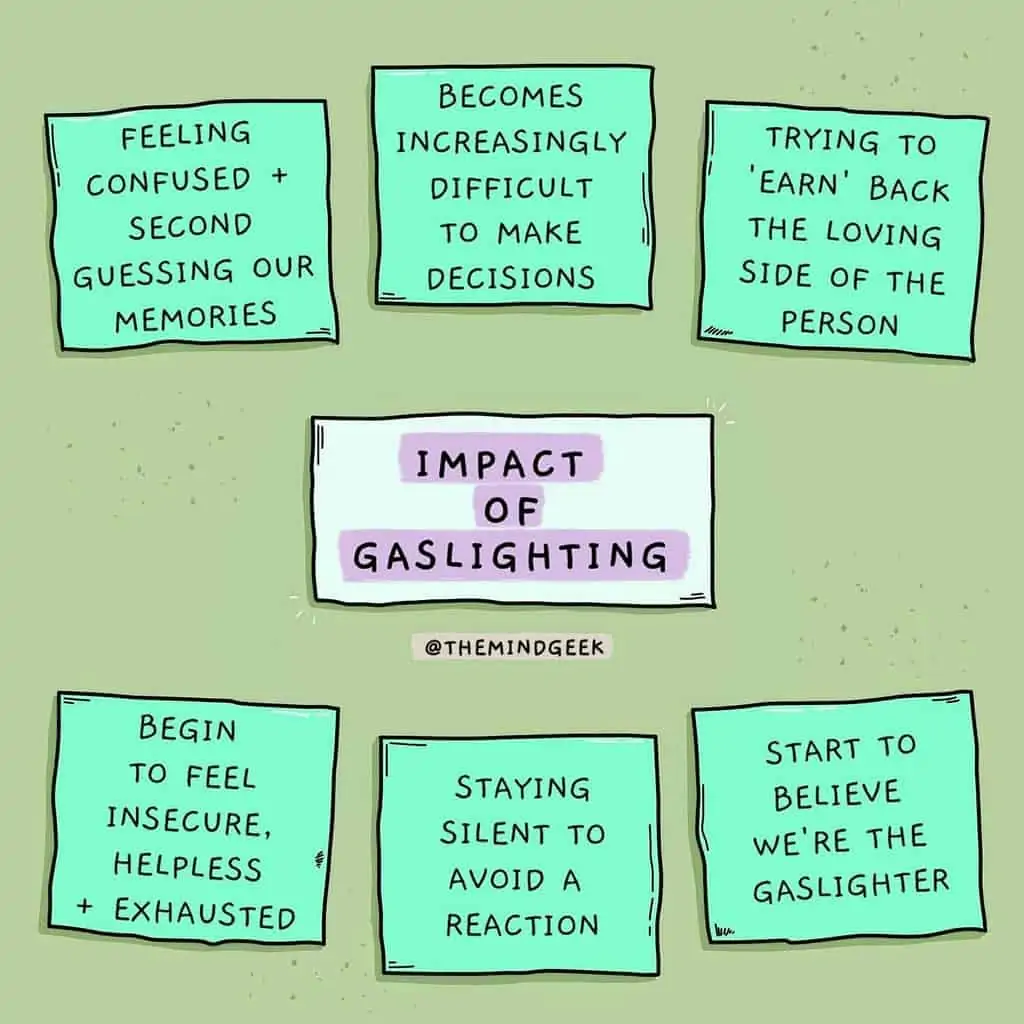
If a partner already doubts their own judgment because of their low confidence, past trauma, or social messages, the gaslighter’s claims fit easily into those doubts.
Tactics in this include reframing past events, insisting that a behavior “never happened,” or presenting selective facts that support the false narrative.
Over time, the victim comes to accept the gaslighter’s version of reality, relying on their gaslighter to tell them what is true and what is not.
This slow shift in belief explains the confusion. Victims are too dazed to trust their own mental state.
4. Reinforcement of relationship injustice.
Gaslighting reinforces the overall injustice toward the hurt partner.
The gaslighter removes fairness from the relationship. Basic respect disappears.
- They deny your experiences, blame you for your suffering, and dismiss your calls for help.
- They try to minimize the damage they did. They claim they’re helping. Or call you too sensitive.
- Finally, they portray them as unstable or unreliable so that others doubt them, and the gaslighter’s abuse goes unchallenged.
Gaslighting is a major tool narcissists use to isolate their partners and prevent them from getting outside support to assert their rights.
Gaslighters make unfair rules seem normal. They make their needs and perspectives the default while discounting the partner’s rights, independence, decision-making, and psychological safety.
The partner goes into a state of learned helplessness. They accept their reduced status in the relationship, tolerate further mistreatment, and lose the ability to leave or change the relationship.
5. Stereotypes and identity leverage.
Gaslighters use stereotypes to destroy your credibility. This gives them control.
They use common biases about gender, race, or family. Your concerns become ‘predictable flaws’ instead of real problems.
For example, they may link femininity with being overemotional or irrational.
Worse, that pre-existing cultural script makes the gaslighter’s denials easier to accept for their partner and for others who witness it.
This tactic serves two linked aims:
- First, it shrinks how the partner can speak or act without being dismissed. Raise a concern, and you risk confirming a stereotype.
- Second, it protects the gaslighter’s worldview and behavior. By demolishing their target’s ability to interpret events in their own way, they prevent challenges that could force self-examination or change.
Over time, victims believe the stereotype. The relationship’s morality gets frozen.
Gaslighting In Public: Post-Truth & Whistleblower Retaliation
Elena Ruiz, in Oct 2020, introduced the term “cultural gaslighting to describe the social and historical infrastructure support mechanisms that disproportionately promote abusive mental environments in settler-colonial cultures in order to further the aims of cultural atrocity and dispossession.”
1. Gaslighting by Leaders
Other than in intimate relationships, gaslighting can be witnessed in politics and business, particularly when a powerful leader is:
- xenophobic (hostile to people from other countries),
- narcissistic (excessively in love with their self-image), or
- dictatorial (wielding absolute power with no challengers).
American journalists widely used the term “gaslighting” to report US President Donald Trump’s many actions.
- Gaslighting in the public domain involves creating false or alternate narratives.
- They also undermine the victim’s narratives and cover up their lies to make them sound plausible.
- Public gaslighters do not base their arguments on facts, and often label others as irrational or insane.
Post-truth politics means facts don’t matter. Beliefs and opinions matter more than facts in shaping public opinion.
2. Gaslighting by Bosses
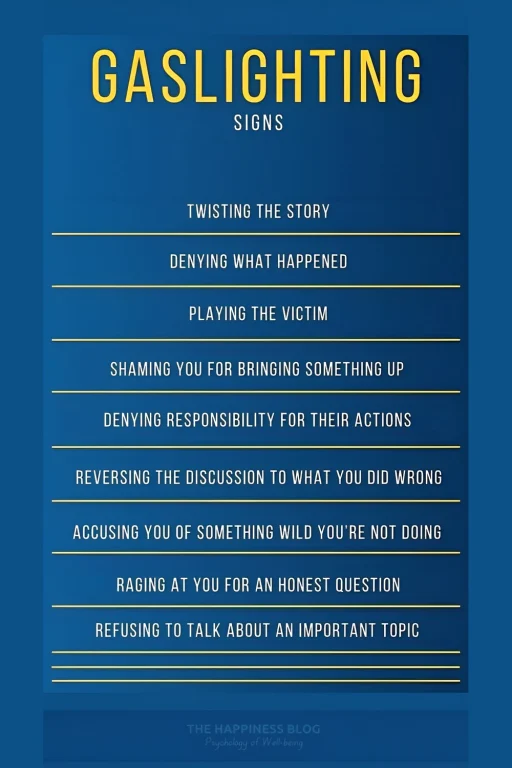
A gaslighting boss gives you tasks. Later, they deny it happened.
They may try to isolate a vulnerable worker at the office, and then claim that the victim came alone, on their own accord, to malign the boss.
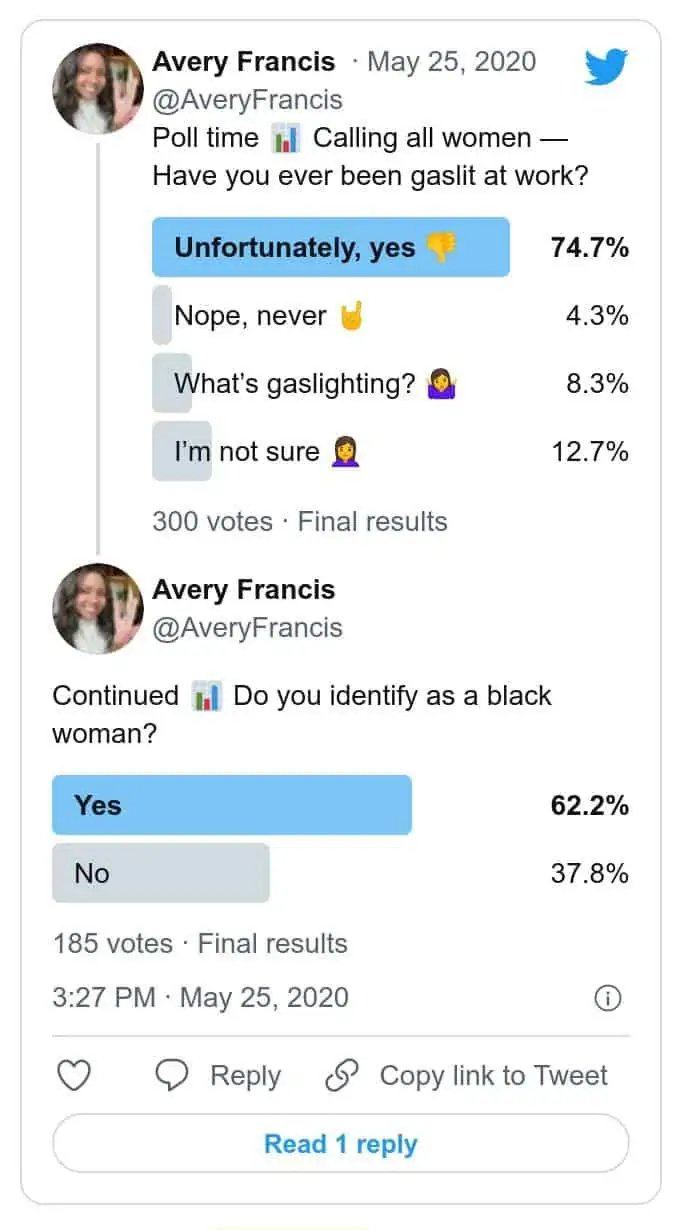
A Black woman worker is more likely to be gaslighted at the workplace.
3. Gaslighting by States
Even governments can gaslight their citizens.
Gaslighting is a common tactic used against anti-establishment whistleblowers, most notably Edward Snowden.
Kathy Ahern writes, “Whistle-blower gaslighting creates a situation where the whistle-blower doubts her perceptions, competence, and mental state.”
Did you know there’s a List of Whistleblowers on Wikipedia?
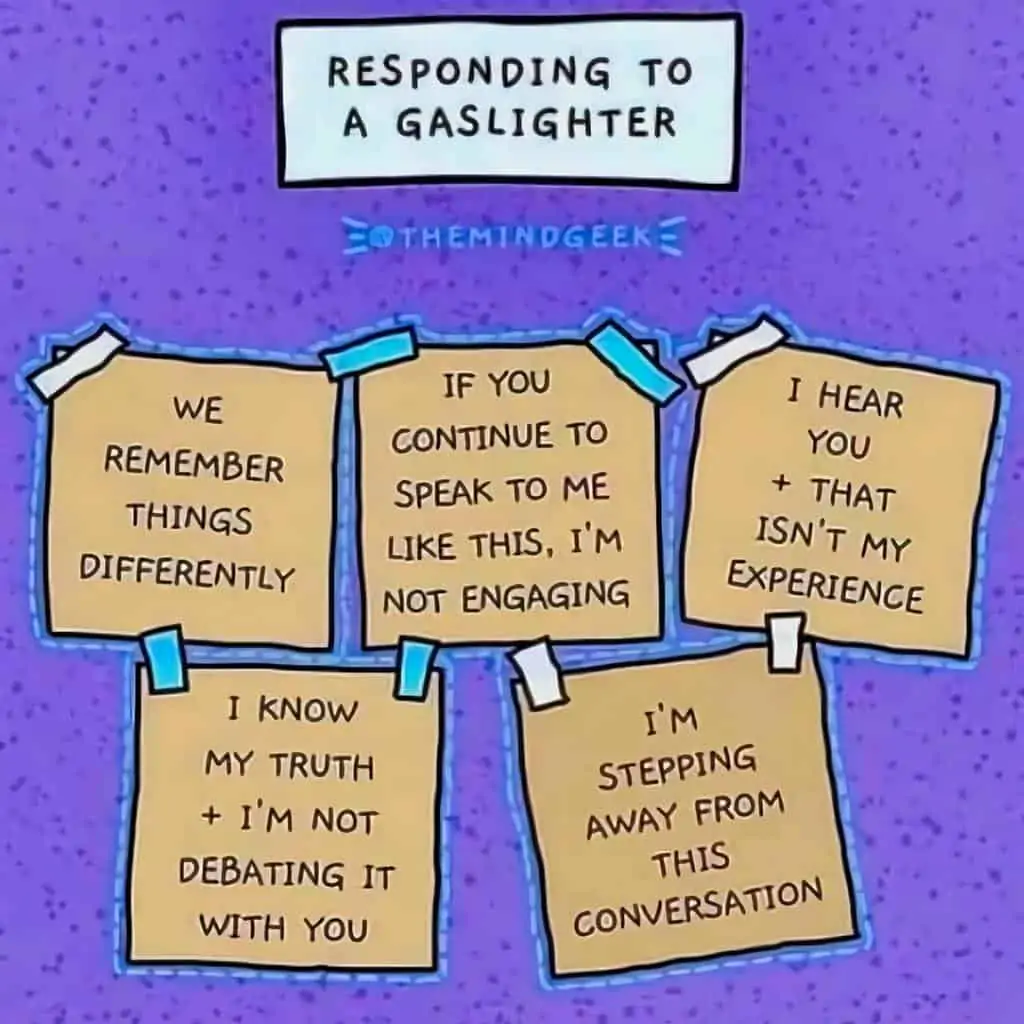
How to respond to gaslighting?
Experts give three tips. Keep records of what you said and did. Find someone who confirms your reality. Walk away with your version intact.
- Show courage in speaking out at the earliest sign of being shown a different reality. Many instances of gaslighting start as micro-hostile behaviors.
- Set healthy boundaries and be selective in trusting people early on in relationships. Keep your self-esteem high to shield against succumbing to gaslighting behavior.
- At work, keep a paper trail or a string of emails of crucial conversations, so you can clearly identify if your boss or colleagues are gaslighting you.
- Finally, if you find out the person is actually an extremely cruel narcissist or a pathological abuser, the best and safest option is to break up or reduce the relationship to minimal interactions.
Read: Beware of These Classic Gaslighting Phrases!
Final Words
Gaslighting is only effective when there is an unequal power dynamic, and the gaslighted person has acted submissively before the gaslighter, showing them the demanded respect.
However, gaslighting lies on a spectrum; it’s not like you either have it or you don’t. Any one of us can occasionally gaslight.
It takes two to set up a gaslighting scene. The moment you, the victim, walk away, the gaslighter loses their fang. Walk out of the abusive relationship before they do.
√ Also Read: How To Stop Gaslighting In Relationships And Take Back Power?
√ Please share this with someone.
» You deserve happiness! Choosing therapy could be your best decision.
...
• Disclosure: Buying via our links earns us a small commission.