
Today's Sunday • 11 mins read
Friendship is a choice, and it’s one of the most important you’ll make. Sometimes that choice goes wrong, and you end up with a toxic friend.
But toxic friendships rarely start that way. You don’t make friends with someone you know will hurt you. Most begin as ordinary relationships that turn toxic over time.
You may not break away because you’re too familiar with them, you fear hurting them, or you worry you will never have another friend. So you stay, and you keep getting hurt.
But a toxic friend can wound you more than all their past goodness can heal.
Toxic friendships are one-sided relationships where one person demands more than they give. They feature frequent arguments, condescension, chronic stress, and a lack of warmth. A toxic friend is insensitive and uncaring, disregards boundaries, and is often absent in times of need.
8 Signs of A Toxic Friendship
Do you have a friend who makes you feel exhausted, stressed out, or unhappy after spending time with them? They might be toxic.
Notice if one or more of these eight signs exist in your friendship:
1. They Want To Decide For You.
A toxic friend holds the power in your relationship. They convince you that they know what is best for you, and so, they will make decisions for you.
They decide what you wear and eat, where you go, and who you meet. You do as they say because you are afraid of disappointing them.
They could hurt you without realizing it by taking away your independence and right to learn from your mistakes.
Worse, they might shift the blame to you if their terrible decisions cause problems.
In a twisted way, they also decide that you are far too sensitive and enjoy playing the ‘victim card,’ and they tell this to all who know you both.

2. They Don’t Allow Disagreements.
Friends disagree and sometimes share different opinions from each other, and mostly we don’t mind.
But if a friend blocks you from having any disagreements, take note. This person is drowning out your voice of independence.
Mark them out specifically if they get mad when you don’t back up their opinions and ideas.
If they spend more time arguing with you than listening to you actively, your friendship is likely turning unhealthy.
This is a classic case of a toxic friendship where you spend more time fighting and defending, instead of listening and seeing each other’s viewpoints.
3. They Are Narcissistic And Manipulative.
Toxic friends often gaslight you unconsciously. It means they can convince you of a twisted reality about yourself, like:
“You don’t realize how everyone thinks you’re stupid.”
This is their dirty trick to isolate you from your social circle. So they find it easier to manipulate you to hold the upper hand in your relationship.
They can guilt-trip you.
- For example, they might turn up one morning at your place, quite charming. Then, within a few hours, they turn sour and dark.
- You will find nothing obvious to explain the drastic shift in their mood and behavior.
- So, you are left wondering what you did to upset them.
That is how they make you feel guilty for their negative emotions.
A toxic friend can be a narcissist you can’t easily argue with. Narcissists are people who place themselves at the center of a social circle to seize attention and praise.
You will rarely hear “Sorry” from them. Instead of apologizing for their mistakes, they will attack you for pointing out their mistake.
Even when they say sorry, it is usually a fake apology waiting for a chance to get you to apologize as revenge. Take note of this toxic sign.
4. They Constantly Criticize And Demean You.
They are always putting you down. Narcissistic friends shred your self-esteem and self-image and make you feel like you are nobody.
It is okay for friends to make fun of your achievements once in a while, but a narcissist will repeatedly demean and attack you for your experiences, achievements, and choices. It signals a toxic friendship.
They will criticize you even when your achievements are outstanding, feeling obligated to tell you you don’t deserve the recognition or its celebration.
Of course, they will often minimize you behind your back.
They can insult you severely during your bad phases. They can label you as a failure and an underclass, even giving you a bad nickname. But they will offer no support.
And, if you achieved something that they could not, they feel envious or resentful of your success.
They want to make you feel like a loser for achieving anything in life. It doesn’t matter if they think you’re better than them or not.
In short, don’t expect them to support or encourage you positively or constructively.
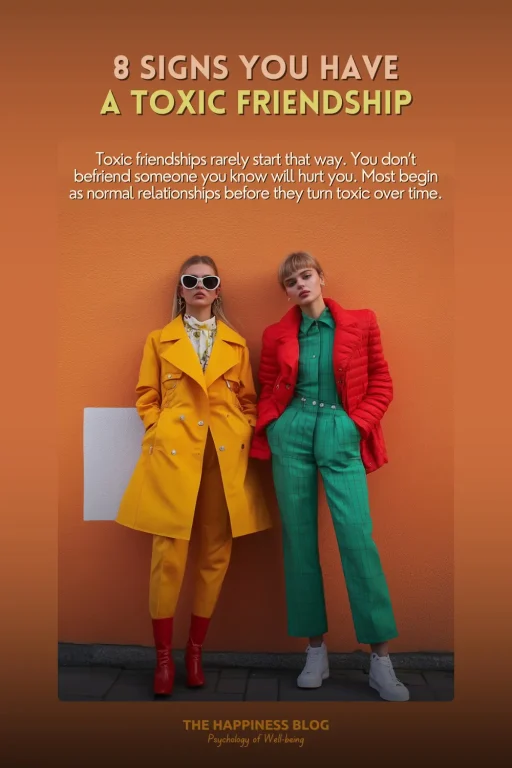
5. They Stop You From Making Other Friends.
Your toxic friend will likely isolate you from your other relationships, so they can have all your attention.
This makes you an easy target for their manipulation. It also stops you from asking others for help in your times of need.
Toxic friends make you stop hanging out with other people by badmouthing your other friends and relations.
They spin fake stories about how they use you to benefit themselves.
They trick you into thinking your other friends have “secret dark motives” against you when they really do not.
They compare your appearance and achievements to those of others to make you feel bad.
And tell you you are “out of their league” and not good enough to be friends with them.
- Do you know why narcissists admire powerful narcissists?
6. They Make You Walk On Eggshells.
I read this on social media:
“Your triggers are your responsibility. Don’t expect the world to tiptoe around you to stop you from getting triggered.”
But your toxic friends do not take responsibility for their trigger factors. They make you stressfully tiptoe around them, so they don’t get triggered.
The constant caution about what you say and do so that they don’t get offended is called walking on eggshells.
You have to weigh your every response, expression, gesture, and word around a toxic friend to prevent an argument or fight with them. You do this out of fear of angering them or not being rude.
Eventually, your friendship becomes a place to deal with uncomfortable situations rather than having fun.
Your toxic friend can also project their feelings onto you, making you ask for their forgiveness, even when you have done nothing wrong.
For example, they may say you’re being irritable when, in fact, they’re the ones who are irritated. And then force you to question yourself and defend your innocence to them.
7. They Abandon You In Times of Need.
First, they have a habit of making you choose between them and someone else. They do it to maintain their importance in your life.
But whenever you need them desperately, and they have to pick between you and something else, they will desert you.
They belittle you by labeling your issues as insignificant and leaving your side when you get challenged or threatened.
They typically make excuses to make way for the exit whenever you need them the most, even if you’re their best friend.
Observe them from now on, if you haven’t already, and notice how they come up with a reason to get out anytime there’s an emergency.
8. They Are Constant Complainers Who Make You Miserable.
Your toxic friends are pessimists, whiners, and scaremongers.
Toxic people exude a pessimistic and dismal outlook toward you and your life. They are a drain on your happiness and always find a reason to bring you down during your times of joy and glory.
So much so that you dread sharing your good news with them because you know you will be miserable after telling them.
Friendships are supposed to make you happy. However, meeting up with your toxic friends always makes you feel horrible afterward. They somehow always make you feel useless, despicable, and self-critical.
They are biased against you. They do quite well at highlighting your failures and making you feel sad about your ambitions and accomplishments.
6 Ways To Deal With Toxic Friends
It’s a difficult emotional task to deal with toxic friends. But you do not have to put up with a friend who makes you feel bad. You deserve peace and respect, so move on.
Here are six ways to deal with a toxic friend:
- Be honest with yourself. It can be difficult to accept that your friend is toxic, but it is more important that you’re honest with yourself about how they are making you feel. If you constantly feel drained, stressed, or unhappy after spending time with them, then they are probably a toxic friend.
- Don’t be afraid to say no. If your friend is constantly asking you for favors without reciprocating, it is okay to say no. You don’t have to do everything they ask. If they’re always putting you down, you don’t have to put up with their negative behavior.
- Spend time with positive people. Surround yourself with people who make you feel good about yourself. These are the people who will support you, lift you up, and make you laugh.
- Take care of yourself. Make sure you are getting enough sleep, eating healthy foods, and exercising regularly. Taking care of your physical and mental health will help you to cope with the stress of dealing with a toxic friend.
- Take a break. If the situation is too stressful, you may need to take a break from your friend. This could mean spending less time with them before deciding to cut them off completely.
- Seek support. If you are struggling to deal with a toxic friend, it can help to seek support from a therapist or counselor. They can help you to develop healthy coping mechanisms.
Not everyone needs to be in your life forever. You’re better off alone than being in a toxic friendship.
What To Do If You Are The Toxic Friend
You may not even realize that you are the toxic friend. To find out, ask yourself these questions:
- Do I ask before I help, rather than assuming they need it?
- Do I give them time with other friends without making them feel guilty?
- Do I avoid taking advantage of them or abandoning them in times of need?
- Do I welcome their presence and focus more on them when we’re together?
- Do I make them feel comfortable and show them they are wanted in my life?
- Have I asked them directly whether I am being toxic, and listened to their answer?
- Do I plan adventures and fun times together without forcing my decisions on them?
- Do I respect their boundaries and avoid pressuring them to reveal or do things they don’t want?
Friendship Paradox
The Friendship Paradox is a phenomenon first noticed by sociologist Scott L. Feld in 1991, which suggests that, on average, most people have fewer friends than their friends do.
It is also a type of bias in which a person believes that when they are with their friends, they are not their true selves with them. Rather, they are busy being someone else.
While in the company of our friends, we think we have more freedom to be ourselves.
But, in fact, we end up suppressing our true identity. We put up behaviors that garner the most attention and appreciation from them. That is the friendship paradox.
The paradox suggests that trying to maintain a healthy friend group may be an impossible task. Identifying the toxic people in your group can help solve this problem.
Interestingly, this issue is more acute in these times when the people we follow on social media have friends and followers in millions, which makes us feel unnoticed and unimportant.
Are your Facebook friends making you unhappy?
Final Words
Toxic people are everywhere. They are in the workplace, in your personal life, and even in your family. They can make you question your self-worth or make you feel inferior to them.
The solution: Stop trying to please them. Ignore their manipulation. Walk away, whenever necessary.
√ Also Read: 12 Core Traits of The Dark Personalities
√ Please share this with someone.
» You deserve happiness! Choosing therapy could be your best decision.
...
• Disclosure: Buying via our links earns us a small commission.