
Today's Saturday • 9 mins read
— Reviewed by Dr. Sandip Roy.
Your gut health impacts your mental state, and a well-balanced diet helps you stay mentally strong.
Does food directly affect happiness? Can you eat certain foods to lift your mood? The short answer to both is yes.
Read on to peek into the science of nutritional psychiatry. Get inspired to build a list of happy foods to eat every day.
Remember: Mental health does not only mean the absence of mental illnesses, it also means we are emotionally, psychologically, and socially healthy. A balanced diet can help us achieve that.
How Food Makes Us Happier
Food makes us happy, no doubt. Here’s how:
Food nutrients can help the body produce feel-good neurotransmitters like serotonin and dopamine:
- Serotonin (“happy hormone”) helps stabilize mood, promotes happy feelings, lends a sense of calmness, and encourages sleep. Tryptophan-rich foods like eggs, cheese, tofu, nuts, and seeds can boost serotonin levels. Low serotonin levels have been linked to impulsive behavior, sleeplessness, memory problems, cognitive decline, and depression.
- Dopamine (“pleasure chemical”) is related to rewards, motivation, and pleasure. It is released on eating comfort foods. Low dopamine levels can cause anxiety, mood swings, hopelessness, depression, and lack of motivation and energy.
Eating regular meals and avoiding blood sugar spikes and dips is also helpful for mood stability.

Nutritional Psychiatry
Nutritional psychiatry is the use of food supplements to protect and improve our psychological well-being, as well as somewhat reverse the effects of aging.
- When you eat, the body breaks down the food into substances that it uses to make chemical messengers in the brain, such as serotonin and dopamine.
- Food also acts as a raw material for stress hormones such as opiates. What you consume plays a vital role in the functioning of the nervous system, including the brain.
According to nutritional psychiatry, “you are what you eat.” This appears to be true because there is a connection between food and mood — the gut-brain axis.
The food we eat affects our mental health, and our mental health affects the kind of food we choose to eat.
- Research shows the gut-brain axis is a two-way link between our central nervous system (CNS) and the enteric nervous system (ENS).
- Experts found that our vagus nerve connects the brain and gut through biochemical signals traveling between them. The gut produces many neurotransmitters, like dopamine and serotonin, just like the brain.
An easy way to not this gut-brain connection is to note the energy boost you feel after eating a chocolate or an ice cream. Or recall a time when you skipped breakfast or lunch and were exhausted the next day.
Our gut is also home to about 100 trillion microorganisms, which is 10 times the number of all the cells in our body. So, are we harboring them or are they harboring us?
Studies show these gut microbes help the development and growth of our nervous system (CNS and ENS) in the early weeks after our birth.
Anything that affects your digestive tract affects your brain, and vice versa is true. It is for this reason, current research is focusing on various nutritional strategies for the management of mental health.
Research shows the gut-brain axis is a two-way link between our central nervous system (CNS) and the enteric nervous system (ENS). The food we eat affects our mental health, and our mental health affects the kind of food we choose to eat.
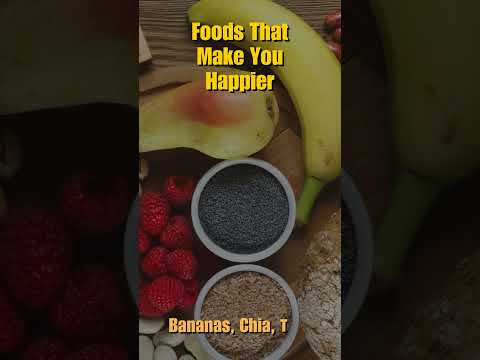
What Foods Make You Happier: Best Foods To Eat For Happiness
A healthier gut makes a happier person. Remember to enjoy a balanced diet for a happier mood!
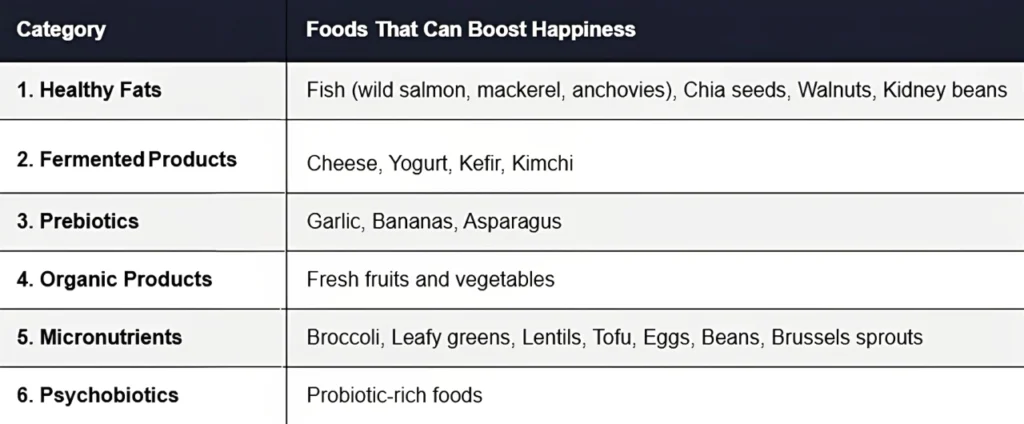
A summary of foods that can boost your happiness:
1. Healthy Fats
The main sources of healthy omega-3 and omega-6 fats are kidney beans, fish, chia seeds, and walnuts.
Fat makes up over 60% of the brain and forms an essential part of the myelin sheath, the nerve cell coating that allows messages to be transmitted across the nervous system.
We need healthy fats (like olive oil, omega-3 fats found in plants and fish sources, and coconut oil) in our diet for optimal brain and mental health.
The brain has high quantities of omega-3 fatty acids, 90% of which is docosahexaenoic acid (DHA).
- Low DHA levels in the brain have been linked to learning and memory issues.
- Higher DHA levels in the bloodstream have been related to improved cognition.
Plant sources of omega-3 fatty acids include walnuts, flax, and chia seeds. Animal sources of omega-3 include wild salmon, mackerel, herring, and anchovies.
If you suffer from clinical depression, using fish oil supplements is an appropriate choice.
2. Fermented Products
They include cheese, yogurt, kefir, and kimchi, among others, and help to improve digestion. Eating these food choices will reduce stress and improve your mood.
3. Prebiotics
These are indigestible fibers that serve as food for the probiotics. You can promote the function of the digestive system by having foods that have prebiotics, like garlic, bananas, and asparagus.
4. Organic Products
To reduce exposure to oxidative stress and toxins, consume natural products whenever possible. Get fresh fruits and vegetables as part of your nutrient-dense diet.
| Category | Foods That Can Boost Happiness |
|---|---|
| 1. Healthy Fats | Fish (wild salmon, mackerel, anchovies), Chia seeds, Walnuts, Kidney beans |
| 2. Fermented Products | Cheese, Yogurt, Kefir, Kimchi |
| 3. Prebiotics | Garlic, Bananas, Asparagus |
| 4. Organic Products | Fresh fruits and vegetables |
| 5. Micronutrients | Broccoli, Leafy greens, Lentils, Tofu, Eggs, Beans, Brussels sprouts |
| 6. Psychobiotics | Probiotic-rich foods |
5. Micronutrients
To stay happy, you need vitamins, fiber, and proteins. You can manage depression by consuming vitamins from broccoli, leafy vegetables, and lentils.
Proteins raise the level of dopamine to promote energy and maintain a good mood. Sources of protein include tofu, eggs, and beans.
Foods such as Brussels sprouts are rich in fiber and also promote the health of the digestive system.
6. Psychobiotics
Psychobiotics are the live bacteria (probiotics) that confer mental health benefits and improve mood. The term was introduced by psychiatrist Ted Dinan and neuroscientist John Cryan (Dinan & Cryan, 2013).
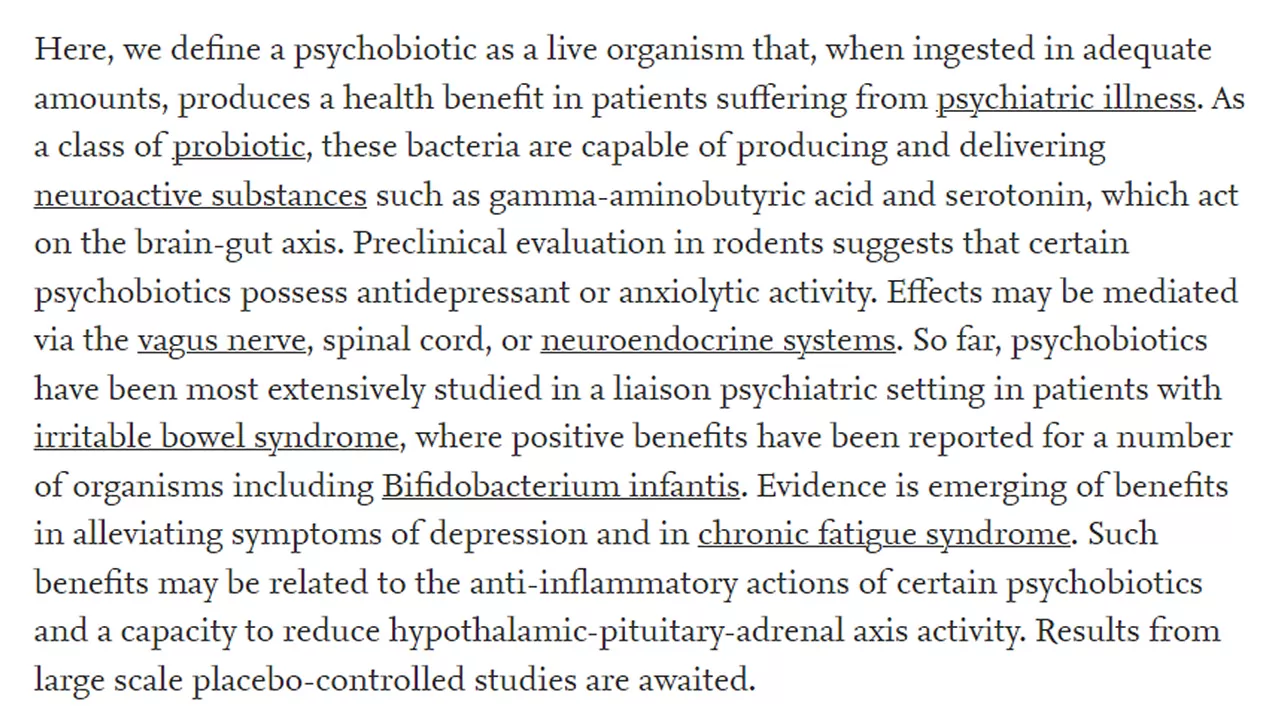
Psychobiotics work via the gut-brain axis, influencing brain function via neurotransmitters, inflammation control, stress hormones like cortisol, and short-chain fatty acids. Benefits are strain-specific.
Scientists now use the term more widely to include:
- Live bacteria: the core group, such as Lactobacillus plantarum, Bifidobacterium breve, and other strains. These remain the most studied psychobiotics.
- Prebiotics: non-bacterial fibers (like certain oligosaccharides) that feed beneficial gut bacteria and produce mental health effects.
- Other extensions: some researchers include postbiotics (metabolites or non-living bacterial components) and paraprobiotics (inactivated microbes). These provide benefits without live bacteria.
What Foods To Avoid: “Bad Foods/Sad Foods”
Make mindful food choices and avoid these foods if you aim for a happier mood:
- Alcohol and tobacco in any form or amount. Alcohol can cause irritability and disrupt sleep patterns. Tobacco and alcohol both cause cancer.
- Packaged Meats: Ham, bologna, hot dogs, and turkey often contain nitrates, colorings, food preservatives, and additives. These can lead to mood swings, water retention, bloating, and headaches.
- Highly Processed Foods: Foods with added sugars and minimal fiber (like many packaged snacks) can cause rapid blood glucose spikes and crashes. For example, soda, junk food, fruit juices, and food with high sugar content.
- Unhealthy Dietary Patterns: Avoid sweetened beverages, fried foods, processed meats, refined grains, high-fat dairy, biscuits, and pastries.
- Simple Carbs: Steer clear of foods that cause blood sugar spikes, such as sugar, white bread, and white pasta. Blood sugar spikes have been associated with a higher risk of depression.
Unhealthy food seems to affect the immune system by producing inflammatory chemicals. Gut ill-health can lead to anxiety, psychosis, and mental anguish.
- When blood sugar levels are high, the body produces inflammatory substances, like cytokines (small proteins released by the immune system that act as cell-to-cell signals).
- Too many carbohydrates and sugars can also trigger the pancreas to secrete high levels of insulin that can make a person insulin resistant, diabetic, and up to 2 to 3 times more likely to have depression.
FAQs
1. What are comfort foods?
Comfort foods are typically high-carbohydrate foods that we tend to eat under emotional stress. They rapidly release glucose into the bloodstream, which reaches the brain and provides energy.
Because of our brain-gut axis, we become habituated to consuming easily digestible sugar-laden foods to supply our brains and feel relaxed and joyful. However, most comfort foods are unhealthy food choices.
2. Why does food make me sleepy?
Feeling sleepy after eating can be a result of underlying insulin resistance. In them, carbohydrate-rich foods are not rapidly processed by insulin. As a result, the bloodstream glucose is unable to enter the cells to provide cellular energy, making the person sleepy.
High levels of glucose in the blood also trigger the liver to convert it into fat, a process that requires energy and causes sleepiness.
Final Words
Mental health is a state of well-being in which every individual realizes his or her own potential, can cope with the normal stresses of life, can work productively and fruitfully, and is able to make a contribution to her or his community.
— World Health Organization (WHO)
The food you eat determines your mood and mind to a large extent. A focus on healthy food choices will improve your gut health, that in turn will trigger the nervous system to produce mood-elevating hormones.
Unhealthy foods, on the other hand, hinder the efficiency of your body in digesting food. As a result, you end up with inflammation and stress-related diseases.
With healthy food, you get a happy mood. So, ensure you stick to a nutritious diet. The next time you feel moody or depressed, pay attention; it could be your body telling you to eat healthily. Remind yourself then that you can eat for happiness.
• • •
√ Also Read: Mindful Eating Made Easy: 20 Best Tips From Everywhere
• • •
Author Bios: Jessica Smith wrote an earlier version of this article. Edited and rewritten by Sandip Roy, a psychology writer, happiness researcher, and medical doctor.
√ If you liked it, please spread the word.
» You deserve happiness! Choosing therapy could be your best decision.
...
• Disclosure: Buying via our links earns us a small commission.