
Today's Monday • 10 mins read
Jean Piaget’s cognitive development theory tells us that children learn and grow through four different stages of mental development.
Cognitive theories explain how we process information, both from the external world and within our own minds, and how they shape our emotions, behaviors, and mental health.
How Piaget Built the Science of Child Intelligence
Jean Piaget (1896–1980) began his career as a biologist studying mollusks and sparrows. His first scientific paper on albino sparrows was published when he was barely 11 years old.
In 1920, while working with intelligence tests, Piaget noticed that young children repeatedly made certain types of mistakes that older children did not. He found they weren’t just “worse” at coming up with the right answers. Actually, they had very different ideas about the questions.
This led to his life’s work. Piaget spent his next decades observing children, including his own three, to develop the most comprehensive theory of cognitive development we have today: Theory of Intellectual or Cognitive Development (1936).
Before Jean Piaget, we largely viewed children as “mini-adults” who simply knew less. He showed that all children are active learners who think different from adults.
Each child goes through distinct stages of cognitive growth, each with its own set of mental processes. They are constantly making sense of the world through their interactions with it.
Piaget’s theory remains foundational in education, psychology, and child development. It helps parents, teachers, and caregivers create environments where children can learn naturally and effectively.
Albert Einstein once called Piaget’s discovery “so simple only a genius could have thought of it.”

How Children Learn: Piaget’s Core Mechanisms
This is how children actively construct knowledge of the world:
- Schemas are the building blocks of thinking, mental categories and frameworks that help children organize and interpret experience. A toddler’s schema for “dog” might include “four legs” and “furry.” Anything that fits that definition gets labeled “doggie.”
- Assimilation happens when children unify new experiences into existing schemas. So if the toddler sees a cow and calls it “doggie,” she’s fitting the new animal into her current “dog” framework.
- Accommodation occurs when a new experience can’t be absorbed cleanly and requires changing the schema itself. The child learns that not all four-legged animals are “dogs,” so her categories shift to include “cows” as distinct.
- Equilibration is the balancing process that drives their cognitive development forward. When what children encounter doesn’t match what they expect, the resulting tension pushes them to learn, through assimilation and accommodation, until they reach a better balance.
These mechanisms work continuously as children progress through Piaget’s stages.
Piaget’s 3 Core Assumptions About Children
Piaget based his theory on three core beliefs about how children learn:
- Children are active learners. They build knowledge through personal experiences, not passive reception. Like little scientists, they experiment, observe, and draw conclusions.
- Children are self-directed. They can learn independently without constant adult instruction or motivation.
- Children are intrinsically motivated. They don’t need rewards to learn. Curiosity itself drives development.
4 Stages of Cognitive Development
Piaget proposed children progress through four distinct stages, each building upon the previous. While ages are approximate, the sequence is universal.
| Stage | Age Range | Key Achievement |
|---|---|---|
| 1. Sensorimotor | 0–2 years | Object permanence |
| 2. Preoperational | 2–7 years | Symbolic thought |
| 3. Concrete Operational | 7–11 years | Logical operations |
| 4. Formal Operational | 12+ years | Abstract reasoning |
Stage 1: Sensorimotor (Birth to 2 Years)
In this stage, infants understand the world entirely through their senses and motor actions. They explore by seeing, hearing, smelling, tasting, and touching.
Key Developments:
- Birth to 4 months: Infants begin with simple reflexes (sucking, grasping) and gradually develop coordinated patterns of behavior.
- 4-8 months: Babies become aware of things beyond their own bodies. They intentionally repeat actions that produce interesting results, such as shaking a rattle to hear its sound.
- 8-12 months: Object permanence emerges. This is the understanding that objects continue to exist even when unseen. Before this milestone, show an infant a toy, then hide it under a blanket. For the younger infant, the toy ceases to exist. After object permanence, the child will search for it.
- 12-24 months: Toddlers engage in goal-directed behavior and begin to understand cause and effect. Increased physical mobility, including crawling, standing, and walking, fuels cognitive exploration.
Limitation: Throughout this stage, infants remain egocentric. They cannot perceive the world from any perspective but their own.
Stage 2: Preoperational (2 to 7 Years)
Children now use symbols, including words, images, and gestures, to represent objects and experiences. This is the stage of language explosion, pretend play, and rapidly expanding imagination.
Key Developments:
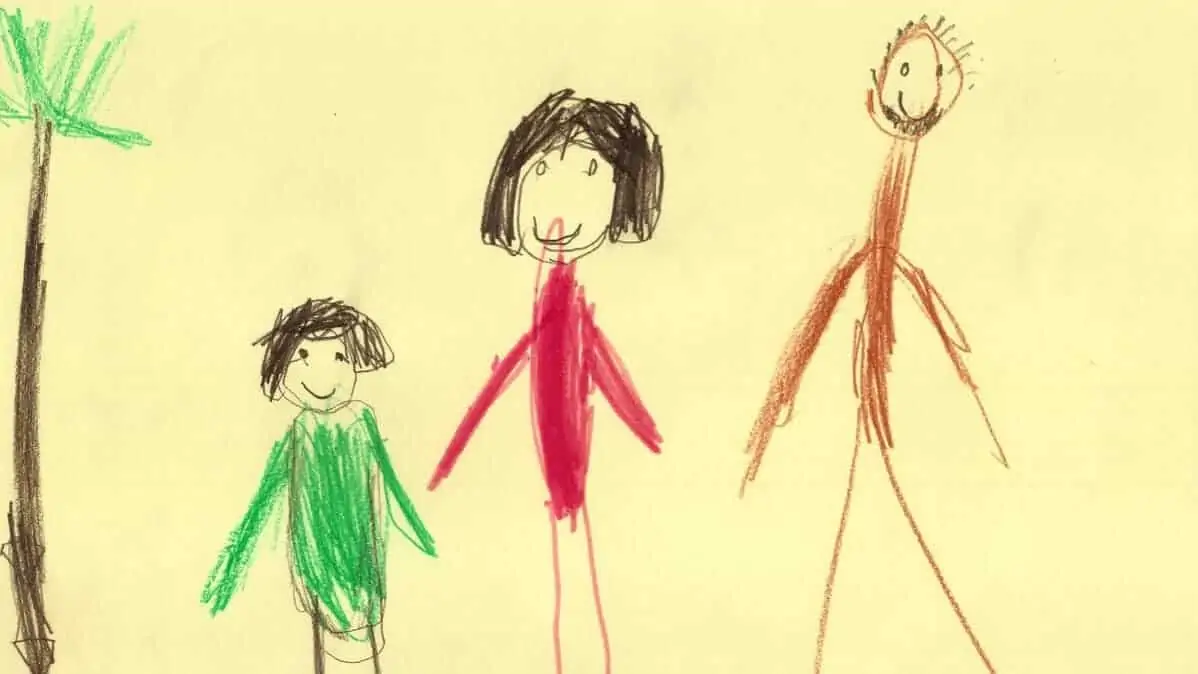
- Symbolic Function (2-4 years): Children begin using one object to stand for another. A broom becomes a horse; a block becomes a phone. When drawing family members, they represent symbolic meaning rather than physical accuracy.
- Intuitive Thinking (4-7 years): Piaget called this “the intuitive age.” Children ask endless questions and seem to know vast amounts, but cannot explain how they know. Reasoning is primitive and based on immediate perception rather than logic.
Key Characteristics and Limitations:
• Egocentrism persists. Children assume others see, think, and feel exactly as they do. If a child covers their eyes, they believe others cannot see them.
• Animism means children attribute life and consciousness to inanimate objects. “The sun follows me.” “The table hurt me when I bumped it.”
• Centration is the tendency to focus on only one aspect of a situation. A child shown two identical glasses with equal water will insist the taller, narrower glass contains more, focusing solely on height.
• Lack of Conservation means children don’t understand that quantity remains constant despite changes in appearance. They cannot yet perform mental “operations” (hence, pre-operational).
Stage 3: Concrete Operational (7 to 11 Years)
Children now develop logical thinking, but only about concrete, tangible situations. Abstract or hypothetical problems remain challenging.
Key Developments:
• Conservation finally emerges. Show a child equal water in two glasses, pour one into a taller container, and they now understand the amount hasn’t changed. They recognize that changes in appearance don’t alter quantity.
• Reversibility means children understand that actions can be reversed. If 3+5=8, then 8-3 must equal 5. They can mentally “undo” an operation.
• Classification is the ability to sort objects by multiple dimensions (color, size, shape) and understand hierarchical relationships. For example, roses and daisies are both flowers.
• Seriation means arranging objects in logical order, such as smallest to largest or earliest to latest.
• Inductive Reasoning emerges. Children observe specific instances and draw general conclusions. “My friend eats cookies. Another friend eats cookies. People eat cookies.”
New Understanding:
Children now develop decentration, the ability to consider multiple aspects of a situation. More importantly, they begin to understand that others have different thoughts and feelings. Empathy develops as they can now “put themselves in someone else’s shoes.”
Limitation: Thinking remains tied to concrete, observable reality. Abstract concepts and hypothetical situations still pose difficulties.
Stage 4: Formal Operational (12 Years to Adulthood)
Adolescents develop the capacity for abstract, systematic, and hypothetical thinking. This stage marks the emergence of adult-like reasoning.
Key Developments:
• Abstract Concepts become accessible. Adolescents can now grapple with ideas like justice, love, freedom, and morality. They understand concepts not tied to concrete experience.
• Hypothetical-Deductive Reasoning is the ability to formulate hypotheses and systematically test them. Given a problem, they can consider multiple possibilities and reason through potential outcomes.
• Propositional Thinking allows them to evaluate the logical validity of statements without referring to real-world evidence. “If all humans are mortal, and Socrates is human, then Socrates is mortal” can be evaluated as pure logic.
• Metacognition emerges. This is the ability to think about thinking itself. Adolescents can reflect on their own thought processes and consider multiple perspectives simultaneously.
• Empathy appears. They start to understand why people behave the way they behave and, as a result, become empathic and compassionate.
New Challenges:
Adolescent egocentrism can reappear in two forms:
- Imaginary audience means believing others are constantly watching and evaluating them.
- Personal fable means believing their experiences and feelings are unique and cannot be understood by others.
Piaget’s Note: While Piaget considered this the final stage of cognitive development, he believed learning continues throughout life. The formal operational mind can now acquire knowledge efficiently across all domains.
Summary of Piaget’s Theory: Key Takeaways
- Children are active learners, not passive recipients of information. Piaget believed babies are born with brains ready to learn. They construct their knowledge in stages through experience.
- Stages are sequential and universal. All children progress through them in the same order, though ages may vary. Each stage builds on previous ones. Later stages incorporate and transform earlier ways of thinking.
- Thinking differs qualitatively between stages. Children don’t just know more; they think differently. Development occurs through assimilation, accommodation, and equilibration.
- The first stage is the sensorimotor stage, from 0 to 2 years, when babies explore the world around them using their senses, such as touching, tasting, and smelling. As they get older, they learn to solve simple problems.
- The preoperational stage, from 2 to 7 years, is when children start to use language to communicate and understand things. They also start to use their imagination and play make-believe.
- In the concrete operational stage, from 7 to 11 years, children start to understand how objects can be grouped or sorted in different ways. They also start to understand basic maths like addition and subtraction. But they still have trouble thinking of abstract ideas or hypothetical situations.
- The formal operational stage, from 12 years to adulthood, is when children start to think more like adults and can solve complex problems and understand hypothetical situations. They can also think about different points of view and understand that people can have different opinions.
A Note On Piaget’s Critiques
While Piaget’s theory remains enormously influential, researchers have identified limitations:
- Some abilities emerge earlier than Piaget suggested. Infants show surprisingly early awareness of object permanence with modified testing methods.
- Development may be more continuous than stage-like in some domains.
- Culture and social context play larger roles than Piaget acknowledged. Lev Vygotsky’s sociocultural theory offers important complementary perspectives.
- Formal operations may not be universal. Many adults never fully develop abstract reasoning or apply it inconsistently.
These critiques, however, do not diminish Piaget’s contributions. They remind us that all theories evolve with new evidence.
Final Words
Perhaps Piaget himself said it best:
“Each time one prematurely teaches a child something he could have discovered himself, that child is kept from inventing it and consequently from understanding it completely. If you want to be creative, stay in part a child, with the creativity and invention that characterizes children before they are deformed by adult society.”
Piaget’s greatest gift was teaching us to respect the child’s mind. They are actively and creatively using their intelligence to build a meaning and sense of the world. They are not just filling the empty vessel of their brain with experiences and learnings.
√ Also Read: 10 Signs of Repressed Childhood Trauma In Adulthood
√ Please share this with someone.
» You deserve happiness! Choosing therapy could be your best decision.
...
• Disclosure: Buying via our links earns us a small commission.