
Today's Thursday • 9 mins read
— By Dr. Sandip Roy.
Rumi, the 13th-century Persian poet and Sufi mystic, said many things that speak to the soul. But how does modern psychology interpret Rumi’s quotes?
I thought it would be interesting to examine ten of his beautiful sayings from a psychological perspective.
10 Rumi Quotes That Psychology Agrees With
1. The wound is the place where the Light enters you.
That quote, I feel, relates to the idea of post-traumatic growth. It refers to lasting positive changes after an adversity, trauma, or testing life circumstance.
People grow in different ways after harsh times. Some may respond to adversity by investing in friends (extraversion and agreeableness), others may devote themselves to their work (conscientiousness), and still others may focus on expanding their experiences (openness).
2. Forget safety. Live where you fear to live. Destroy your reputation. Be notorious.
The words in that sound extreme. But I feel they allude to Carol Dweck’s idea of a growth mindset.
A growth mindset is the belief that we can develop our intelligence and abilities through effort and learning, as opposed to a fixed mindset, which views them as static traits.
A growth mindset builds grit and resilience by framing setbacks as chances to learn, not as proof you’re doomed. It drives you to push forward instead of slumping into predetermined outcomes (fatalism).
- Grit, as Angela Duckworth defines it, is passion + perseverance. It keeps you going instead of giving up when things get tough.
- Resilience is bouncing back stronger from setbacks. It helps you see setbacks as temporary, and as chances to improve, not as the end of the road.
So Rumi says if you want to feel truly satisfied in your life, you need to step outside of your comfort zone.
3. Beautiful days do not come to you. You must walk towards them.

Rumi’s line is all about action. You don’t wait for the good times; you act to get there. That’s positive psychology in a nutshell: taking action to make good things happen over waiting for good times.
- Happiness Formula: It’s Sonja Lyubomirsky’s happiness formula: 50% genes, 10% life, 40% what you do. “You must walk towards them,” nailing that 40%. Happiness is built more through what you intentionally do.
- Hope Theory: It fits Snyder’s hope theory too, which says hope has three parts: i. Goals thinking (picking meaningful targets), ii. Pathways thinking (mapping ways to get there), and iii. Agency thinking (believing you can do it). That “walk towards” blends all three: goals, paths, and self-belief in action.
4. What you seek is seeking you.
It’s a poetic spin on a psych truth: self-fulfilling prophecy, which suggests beliefs and expectations about an event may actually increase its chance of happening.
Take Rosenthal & Jacobson’s 1968 study in a California elementary school.
- They told teachers that a certain 20% of their students were set to achieve outstanding results.
- A year later, when they checked the “spurter” group, they had indeed outperformed the other 80%.
- Here’s the exciting part: Those 20% of students had no special capabilities and were as average as others. They had excelled merely because their teachers expected them to be above-average.
Rumi’s right: believe in what you’re chasing, and it might just chase you back.
5. The only lasting beauty is the beauty of the heart.
This quote links to emotional intelligence, self-awareness, and self-acceptance.
- Emotional intelligence (EI) is about recognizing, understanding, and managing our own emotions and those of others. Rumi’s “beauty of the heart” means empathy, kindness, empathy—all hallmarks of EI.
- Self-awareness is the power to recognize and understand our thoughts, emotions, and behavior. It’s knowing who we are, how others see us, and where we fit—spotlighting our talents, strengths, and limits. Rumi’s nudging at an inner clarity that doesn’t fade as youth does.
- Self-acceptance is owning yourself, no apologies, no chasing external validation. Looks fade, trends go, but self-acceptance is the quiet strength that lets you grow stronger.

6. Raise your words, not your voice. It is rain that grows flowers, not thunder.
When you are too loud, it can make people to stress out or react with anger. It tends to kick in the “fight-or-flight-or-freeze” response in the brain, making it hard to listen or engage their thinking brain.
Kind, smart words—like gentle rain—make people feel safe and happy. It creates a sense of psychological safety. This works because our brains like feeling understood and cared for, not shouted at.
So, Rumi might be asking us to pick words that help others feel safe to grow.
7. Let the beauty of what you love be what you do.
That is the psychology of motivation in a nutshell. When we act from a place of passion, guided by our values, we are naturally motivated to pursue our interests.
Science says we find our deepest engagement when our actions align with our values, not when we work for external rewards like paychecks or praise. When your work is your love, all of your effort and focus merge into a flow experience.
Read about the psychology of motivation.

8. Sell your cleverness and buy bewilderment.
This relates to the psychology of awe. The experience of awe, defined as a feeling of wonder, amazement, and smallness in the face of something vast or greater than oneself, has many benefits:
- Intellectual humility: Awe can help us let go of rigid wisdom and fixed biases, and open up to new perspectives. When in awe, we reduce self-centeredness.
- Curiosity and creativity: The wonder associated with awe can stimulate curiosity, exploration, and the synthesis of new ideas and insights.
- Expanded worldview: Awe-inspiring experiences can make us feel more connected to something larger than ourselves, whether it’s nature, the universe, or the human experience.
9. Yesterday I was clever, so I wanted to change the world. Today I am wise, so I am changing myself.
That Rumi quote aligns with the psychology of mindful self-awareness.
It contrasts a reflexive cleverness that pushes us to fix people or situations with a wiser impulse to change our inner world.
Mindful awareness asks us to notice impulses, judgments, and the stories we tell about events. And that noticing creates a space between stimulus and reaction, letting us choose responses rather than reenact habitual patterns.
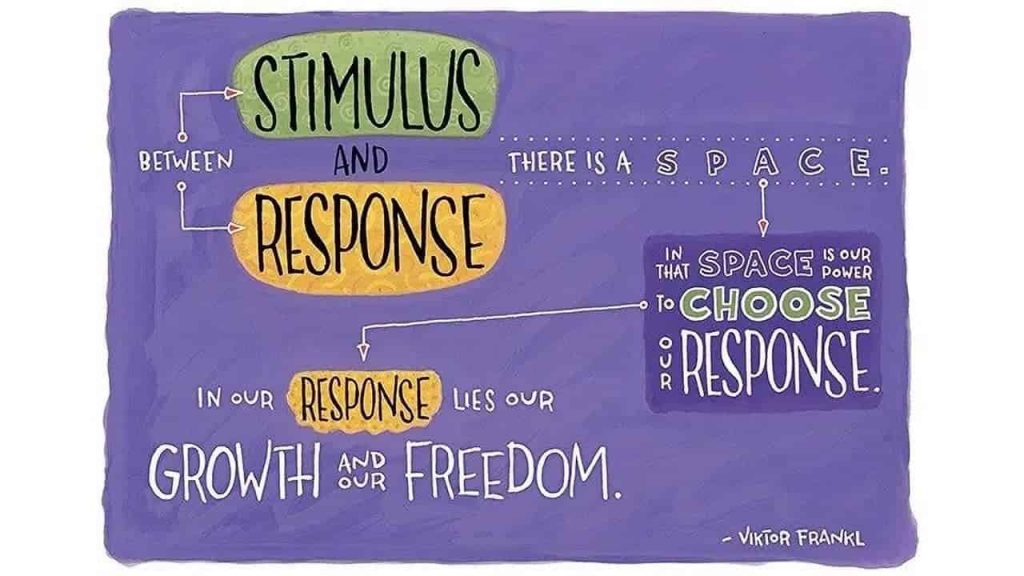
Over time, the practice of pausing reduces our reactivity and makes our next actions more intentional and rational.
Mindful self-awareness also brings curiosity and compassion to inner experience. We learn to investigate the parts of ourselves that want to control the world and, with gentle curiosity, observe what fear or hope fuels them and what beliefs sustain them.
That lowers our automatic defensiveness. It opens room for different choices, which then quietly reshape how we act in relationships and public life.
Self-change guided by mindful awareness is one of the most effective paths to becoming our best selves.
10. When I run after what I think I want, my days are a furnace of stress and anxiety; if I sit in my own place of patience, what I need flows to me, and without pain. From this I understand that what I want also wants me, is looking for me and attracting me. There is a great secret here for anyone who can grasp it.
This quote of Rumi aligns with the psychological value of mindfulness.
Today, a relentless pursuit of our want-fulfillment driven by social comparison is what stresses us the most. Mindfulness is the antidote.
When we practice being fully present and aware in the moment, we stop the craving to keep up with what others have. And instead, focus on what is truly essential.
More Rumi Quotes To Live Life By
Out beyond ideas of wrongdoing and rightdoing, there is a field. I’ll meet you there. When the soul lies down in that grass, the world is too full to talk about.

That quote matches several simple psychological ideas.
- Nonjudgment: Practices like MBSR (mindfulness-based stress reduction) teach us to notice our thoughts and feelings without labeling them as good or bad. This reduces overthinking and strong emotional reactions.
- Stepping back from thoughts: Seeing judgments and opinions as just mental events (not absolute truth) gives our mind space to allow alternate options and makes behavior more flexible.
- Compassion: Moving into a neutral, accepting place lowers harsh self-criticism and helps us connect with others.
- Peak or transcendent experiences: Moments of awe experiences (“lying in that grass”) can boost well-being and reduce rigid moral thinking.
So, when we drop constant right/wrong labels (evaluative framing), step back from our thoughts (metacognitive distancing), and open up to awe (accessing transpersonal states), it helps us feel calmer, think more clearly, and act more kindly.
It’s your road & yours alone. Others may walk it with you, but no one can walk it for you.
Your task is not to seek for love, but merely to seek and find all the barriers within yourself that you have built against it.
These pains you feel are messengers. Listen to them.
Don’t be satisfied with stories, how things have gone with others. Unfold your own myth.
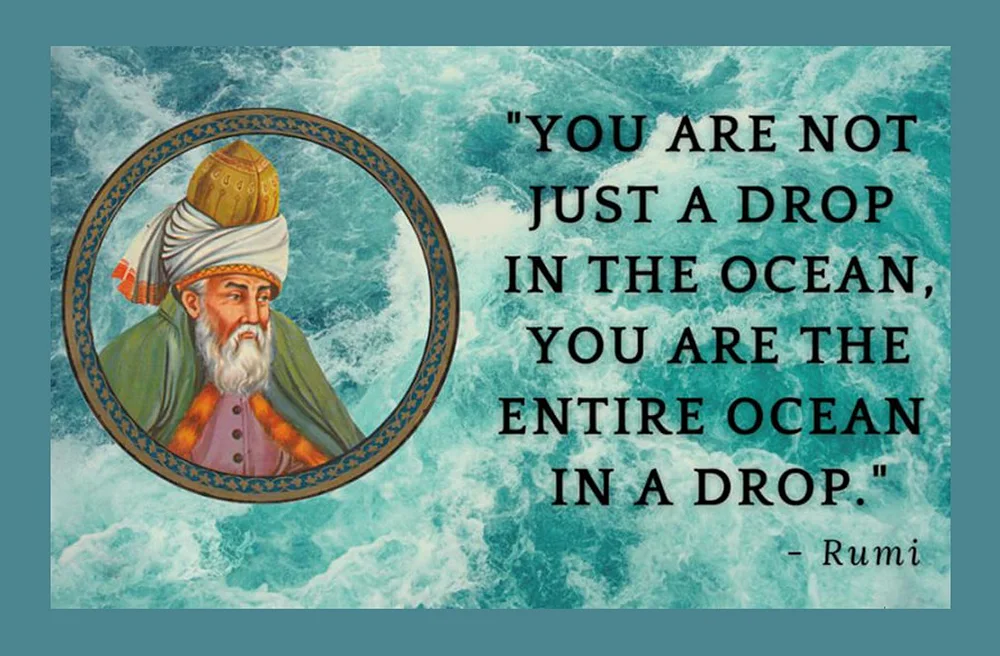
You are not a drop in the ocean. You are the entire ocean in a drop.
Goodbyes are only for those who love with their eyes. Because for those who love with heart and soul, there is no such thing as separation.
As you start to walk on the way, the way appears.
You were born with wings, why prefer to crawl through life?
We carry inside us the wonders we seek outside us.
The minute I heard my first love story, I started looking for you, not knowing how blind that was. Lovers don’t finally meet somewhere. They’re in each other all along.
Let yourself be silently drawn by the strange pull of what you really love. It will not lead you astray.
√ Also Read: 25 Quotes On Narcissists That Reveal Their Icy-Cold Nature
√ Please share this with someone.
» You deserve happiness! Choosing therapy could be your best decision.
...
• Disclosure: Buying via our links earns us a small commission.