
Today's Sunday • 11 mins read
— By Dr. Sandip Roy.
“Half of the troubles of this life can be traced to saying yes too quickly and not saying no soon enough.” — Josh Billings, Navigator & Explorer
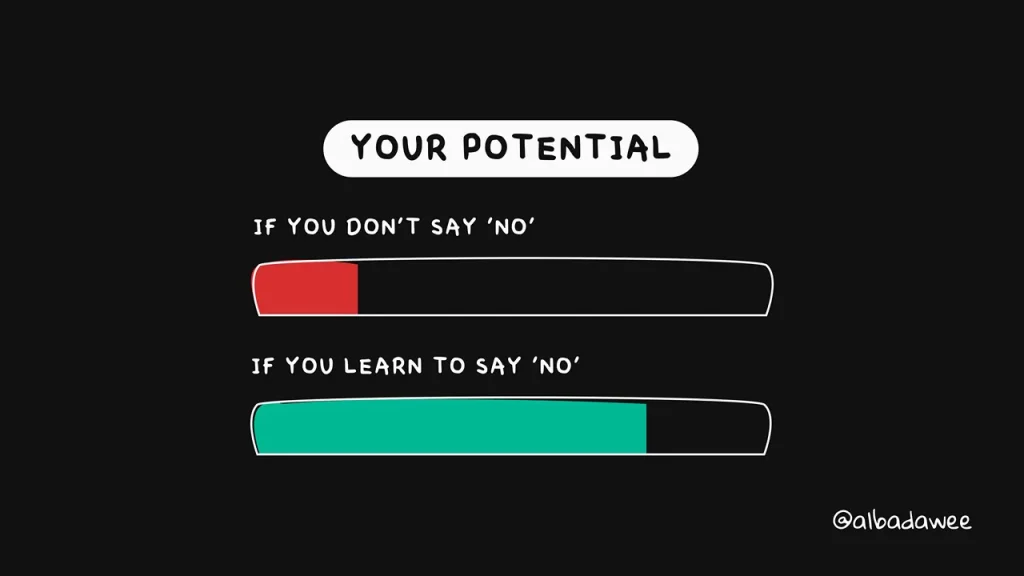
Saying yes feels easier in the moment. You avoid tension. You keep people comfortable. Then your time gets stretched, your plans collapse, and resentment builds quietly.
Most people who struggle with saying no are not weak. They are conditioned. Over time, others learn they can rely on you to say yes.
That inability to say no can be fixed with this mantra: be good, not nice.
- Being good means you protect your time, energy, and peace.
- Being nice means you prioritize pleasing others over your needs.
Quick Answer: How To Say No Politely
Use short, clear responses. No long explanations needed.
- “I can’t commit to this right now.”
- “I have other priorities right now.”
- “I appreciate it, but I’ll pass.”
- “That doesn’t work for me.”
- “Not this time.”
You can be firm and respectful at the same time.
9 Practical Ways to Say No Lying, Hurting, Or Being Rude
Dancing to the beat of someone else’s drums will eventually drain you. Stop. Start saying no without being rude.
1. Delay your response when needed
You don’t have to answer immediately.
When you feel cornered, buy time:
- “Let me check and get back to you.”
- “I need some time to think about it.”
Suggesting a later time may be the best way to say No to a pushy person. You get to avoid the reflexive yes responses while reducing pressure from the other person. It lets you focus on your work, while giving you the time to frame your answer as to why you must refuse.
Use this especially when:
- You feel rushed
- The stakes are high
- The request is unclear
It’s easier to say No when you have this rule: Postpone saying Yes or No right away. Instead, say you will get back once you think and decide.
“I need time. I’ll let you know when I find time to think it over.”
That’s positive procrastination, strategically delaying tasks to a specific time later while focusing on your more urgent tasks.

2. Just Say No clearly, then stop talking
A simple no works best when delivered calmly.
- “No.”
- “No, please.”
- “No, thank you.”
Say “No” in a normal voice and smile. Then cut to silence to close the conversation.
Stay polite in your tone and expression. Don’t over-explain, as you’ll weaken your position and invite a negotiation.
“No” is an entire sentence and does not need another word to complete it.
“In human communication, politeness is very important. It is a key point in enhancing the interpersonal relationship and communication.”
— Reconstructing the Politeness Principle
Never hesitate to say “No” to a bad date.
3. Build a pattern of “no’s.”
People adjust their expectations based on your behavior. The more you say “Yes” to people, the more they assume they can freely access your time.
Start building a new pattern of making “No” as a default.
- “I’m not taking on anything else right now.”
- “I can’t help with this.”
- “No. Thank you.”
Consistency matters more than intensity. Train people who keep asking you favors to know that you would say No.
Gradually, as you keep saying more “Nos,” people will hesitate to push their agenda on you.
4. Assess risk and context
Occasionally, your denial is fraught with mortal danger. You cannot say this type of “No.”
Not every situation is equal. Who is the person who is asking your favor: a cop, a boss, your wife, or a simpleton with a big knife in his hands?
In some cases, saying no has consequences. You need to analyze the possibilities precisely for what might happen if you refuse.
- workplace hierarchy
- safety concerns
- sensitive relationships
In those cases, choose a strategic response:
- delay
- partial agreement
- neutral language
The goal is to protect both your boundaries and your position.
Analyze the possibilities precisely for what grave things might happen if you refuse. If you see these, stop yourself from hurting that person’s feelings. Save your skin first.
You’re making an offer I can’t refuse!
Bossy narcissists can fly into an uncontrollable rage when replied to with No.

5. Use reasons strategically
You don’t owe an explanation. Still, in some contexts, a brief reason helps.
Use it when:
- the relationship matters
- power dynamics exist
- future collaboration is likely
The idea is to keep your reasons ready and preloaded.
Examples:
- “I already have a commitment.”
- “I’m focusing on something important right now.”
Now, your reason could be of good, bad, or lame, doesn’t matter.
I’ve to feed my goldfish and watch them swim around.
6. Accept short-term guilt
Saying no can feel uncomfortable. Saying No can make you feel guilty.
But that feeling is expected. It does not mean you made the wrong choice.
If you say yes instead, the cost often shows up later as:
- frustration
- burnout
- quiet resentment
A useful reframe: “I can handle this discomfort to protect my priorities.”
Life is too short to spend it on people-pleasing. Instead, reserve your time to do things that give your life meaning.
7. Set boundaries early
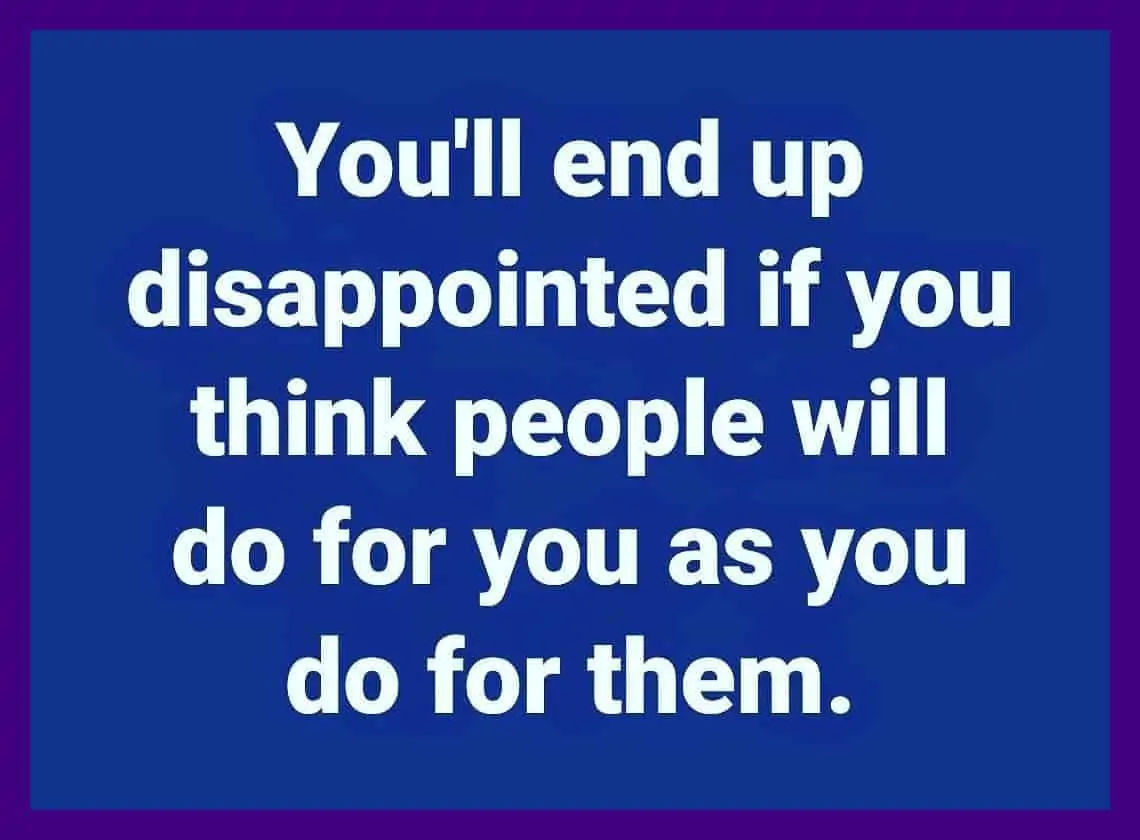
If you wait too long, patterns harden.
Make your limits clear:
- “I’m not available for last-minute requests.”
- “I can’t be your fallback every time.”
Clear boundaries reduce repeated pressure.
I have certain boundaries that are inviolable. So, no. And thank you.
So, do not put yourself in a situation where you have to say Yes when the person inside you is silently shrieking out No.
When you agree to an inconvenient proposal, it might tax you with resentment and anger. Eventually, may burn you out. A simple No saves you all that.
I’m not your guy. Thank you.
8. Accept that you cannot please everyone
You simply cannot please everyone. That is one truth you need to accept fast.
Some people will push. Some will react.
That does not mean you are wrong.
People-pleasing often comes from:
- fear of disapproval
- habit of over-accommodating
You will not meet every expectation. That is normal.
People-pleasers are often low on self-esteem and please others to get their approval to raise their self-esteem.
Also, your nice nature makes you a dispute-avoidant person. Such people are afraid of being disliked and have a strong aversion to negative emotions.
Keep telling yourself:
“Trying to please everyone will ultimately exhaust me. Some people will always stay unhappy, no matter what I do for them. So, I can stop trying to please them all. I’d rather say No.”
A research-based book on the people-pleasing problem is The Disease To Please by Harriet Braiker.
“People-pleasers become deeply attached to seeing themselves—and to being certain that others see them—as nice people. Their very identity derives from this image of niceness. And, while they may believe that being nice protects them from unpleasant situations with friends and family, in actuality, the price they pay is far too high.” — Harriet B. Braiker, psychotherapist
9. Separate your self-worth from their reaction
Some people will resist your no. A few may react negatively.
That response reflects their expectations, not your value.
Your role is to respond clearly. Their role is to manage their reaction.
- “I won’t be able to do that.”
- “That doesn’t work for me.”
Stay steady. No defensiveness needed.

4 Quick Tips To Say No When Someone Is Pushing You Around
1. Be Clear About Why You Are Saying No.
If you’re saying no because you want to avoid hurting someone’s feelings, then make sure you explain why.
Don’t just bluntly say, “I’m sorry, I can’t.”
Instead, try something like, “It’s really hard for me to say ‘no’ to you right now, but I need to focus on my own priorities at the moment.”
2. Don’t Take Anything Personally.
Saying no isn’t easy, especially if you care about what other people think.
But if you don’t stand up for yourself, others will take advantage of you.
So, if someone tries to pressure you into doing something, tell them “No” firmly and politely. Then, walk away.
3. Avoid Arguing or Fighting.
If you’re having trouble saying no, try to avoid arguing with the person who’s pressuring you.
Instead, explain why you need to decline their request. This shows that you respect yourself enough to make decisions for yourself.
4. Give Yourself Time to Think Things Over.
Don’t let anyone pressure you into doing anything you aren’t comfortable with.
Take some time to think things through before making any decision.
Why Is It Difficult To Say No?
Two common reasons:
1. Fear of hurting others: You expect your “no” to damage the relationship. Until you say it, an unsaid No hangs like a burden heavy on your head. A simple “No, thank you” takes that load of indecision off your mind and settles you back into the valley of calmness.
2. Guilt conditioning: You were rewarded for being agreeable. Saying no feels like breaking a rule. When you say No, they know you set a boundary in that relationship. They will have to respect that boundary from then on. It’s this that makes them feel challenged and uncomfortable. So, they react and charge at you to make you feel bad.
In reality, clear boundaries often improve relationships. They reduce hidden resentment and unclear expectations.
It’s perfectly all right to say No, whatever the reason. You never need to feel ashamed about it.
“No” is a complete sentence that doesn’t beg any excuse or explanation.
Why Can’t You Say No: Fear or Guilt?
You find it hard to say No because you are afraid you would sound rude to the other person and make them feel hurt.
Moreover, if you were to say No, you fear you would feel guilty. See that double-edged dilemma?
You realize you ought to speak No to save yourself from painful demands on your time and energy. Still, you cannot bring yourself to do it as often as you would like.
Suppose you are planning to plug into your hobby project or spend some alone time all by yourself when your friend rings you up to come over.
Now, as you cannot say No to them straight to the face, you let your little plan get ruined.
So, for the fear that you might hurt him by saying No, you end up hurting yourself by saying Yes.
Dancing to someone else’s tune costs you your energy and time. That is something you need to save yourself from. To do that, you must learn to say No when you want to say No, without jettisoning your social etiquette.
I am free to say No when I want to say No.
FAQs
- Is it rude to say no without explanation?
No. A respectful tone is enough. Explanations are optional. - Why do I feel guilty when I say no?
Because of learned patterns around approval and responsibility. The feeling fades with practice. - How do I say no to my boss?
Use brief, work-focused reasons. Emphasize priorities: “I’m currently focused on X. I won’t be able to take this on.”
Final Words
Practical scripts for real situations:
At work:
- “I’m at capacity right now.”
- “I won’t be able to take this on.”
- “Let’s revisit this next week.”
With friends:
- “I’m going to skip this one.”
- “Not this time, but thanks for asking.”
With family:
- “I can’t commit to that.”
- “I need to focus on something else today.”
For pushy people:
- “I’ve already said no.”
- “That doesn’t work for me.”
Finally, celebrate the successes of the little polite refusals you will make in the coming weeks. Try to read the book: Boundaries: When to Say Yes, How to Say No to Take Control of Your Life by Henry Cloud and John Townsend.
Egos can make gentle criticism feel like being hit by a ton of bricks.
• • •
Authors: Shirley Brown, an experienced lifestyle orator and academic expert, wrote a short, early version of it. Rewritten, expanded, researched, and edited by Sandip Roy.
√ Also Read: How To Be NOT Sensitive To Criticism (7 Rules For Life)
√ Please share this with someone.
» You deserve happiness! Choosing therapy could be your best decision.
...
• Disclosure: Buying via our links earns us a small commission.