
Today's Saturday • 7 mins read
— By Dr. Sandip Roy.
A particular kind of confusion sets in after months or years with a narcissist. You start being defensive in conversations. You may check your phone obsessively to see if a message arrived needing your reply. You snap at people for reasons you cannot explain, often for no fault of theirs.
Then comes the thought that is hardest to sit with: What if I am the problem? What if I am the narcissist?
So, can a narcissist make you feel like a narcissist? Or why do narcissists say you are the narcissist?
Yes, a narcissist can make you feel like a narcissist. Through repeated gaslighting, projection, and blame-shifting, narcissists systematically transfer their own traits onto their partners.
One of the more insidious effects of living for long with a narcissist: You end up uncertain about who you are and questioning whether the person doing the damage is actually you.
Over time, the victim begins to absorb the accusations. They become defensive, emotionally reactive, and hypervigilant to criticism. Those behaviors, that look like narcissism from the outside, are actually trauma responses to sustained manipulation.
The key difference between a genuine narcissist and someone reacting to one: people with NPD show little capacity for the kind of self-questioning that brings someone to ask this question in the first place.
Research shows that many narcissistic people are quite unaware of, or afraid of, their own internal processes, and they have limited ability for introspection and self-reflection (Ronningstam, 2011).

Why Narcissists Make You Feel Like One of Them
Narcissists are, at their core, skilled at one thing: making their emotional reality feel like yours.
The techniques they use, gaslighting, projection, blame-shifting, are not random cruelty. They are a consistent system for relocating discomfort. When the narcissist feels exposed or criticized, they redirect. You become the one who is “too sensitive.” You become the one who “always makes everything about you.” You become the one who needs to apologize.
Do this to someone for long enough and they internalize it. Not because they are weak, but because the human mind is wired to search for coherent narratives. If someone you trust keeps insisting that you are selfish, demanding, or unreasonable, some part of you will eventually start wondering if they are right.
This is not narcissism taking root in you. It is doubt taking root. The distinction matters.
What Narcissistic Abuse Actually Does To Your Behavior
There is a concept in psychology called reactive abuse: when a victim of manipulation eventually reacts, snaps, or retaliates in a way that looks disproportionate from the outside.
The narcissist provokes you in many small and big ways for days and weeks, and then frames your reaction as the evidence of your instability.
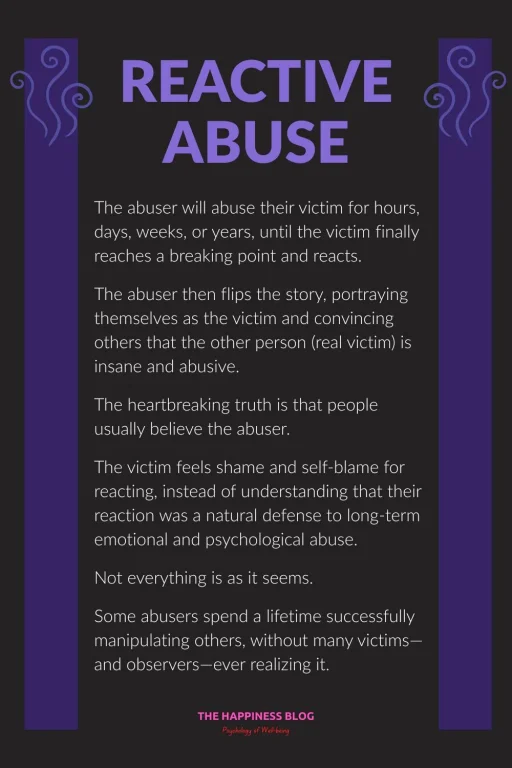
If this has happened to you, it likely produced exactly the kind of behavior you are now questioning in yourself. The outbursts, the withdrawal, and the emotional intensity that seem out of character.
What looks like narcissism from the outside can be a trauma response from the inside (Herman, 1992). The hypervigilance, the hypersensitivity to criticism, and the need for reassurance are adaptations to an environment where trust was systematically dismantled. Not personality traits you developed.
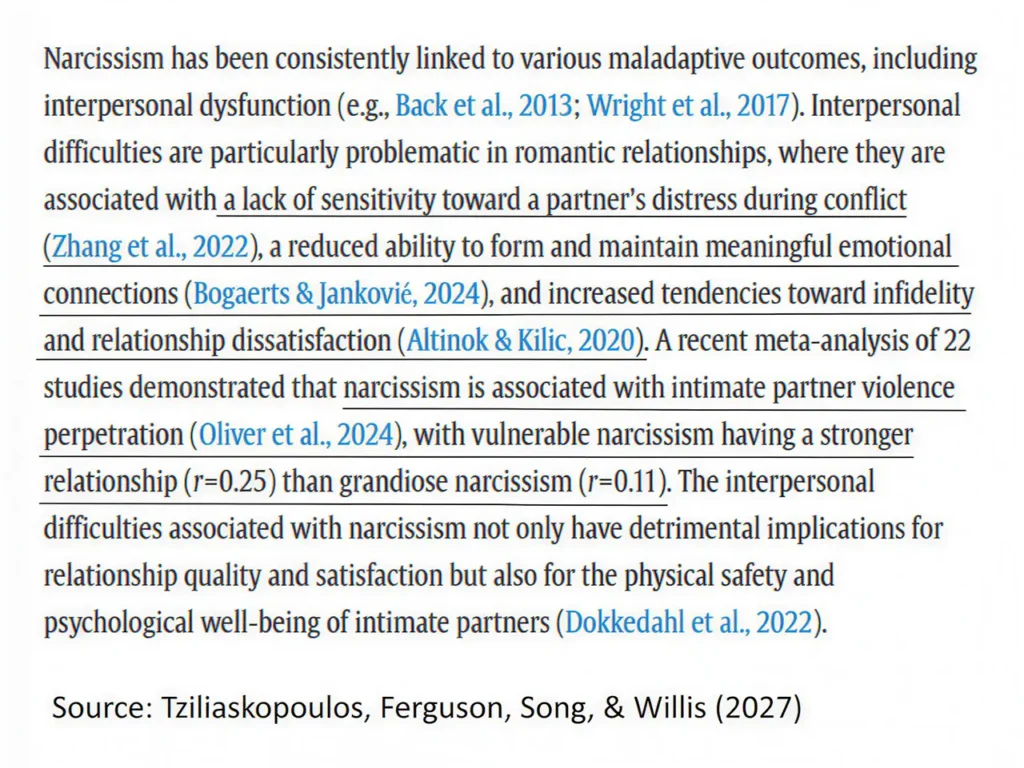
Sustained exposure to a narcissistic partner can also produce behaviors that look like narcissism from the outside: entitlement-like demands for reassurance, emotional reactivity that seems disproportionate, and difficulty tolerating even mild criticism.
These are better understood as defensive adaptations to an environment that punished vulnerability and rewarded performance. They feel wrong once the relationship ends because they were always context-specific, not character-defining.
4 Signs You Are Reacting To A Narcissist, Not Turning Into One
Four clearest markers to tell the difference between someone developing narcissistic traits and someone reacting to narcissistic abuse are:
1. You feel guilt about your behavior. Narcissists characteristically do not feel guilt that they did anything wrong. They have a ready defense for their misdeeds. If you are lying awake reviewing what you said and feeling genuinely bad about it, that capacity for remorse is itself evidence against a narcissistic structure. Guilt requires empathy. Empathy is precisely what clinical narcissism lacks (Campbell & Miller, 2011).
2. Your behavior is context-specific. If you are reactive, demanding, or emotionally volatile primarily in this one relationship or its aftermath, that points to situation-driven behavior. Personality disorders show up consistently across contexts.
3. You want to change. The fact that you are asking the question at all is meaningful. Clinical research documents that NPD patients typically seek treatment because of an acute crisis, an ultimatum from a family member or employer, depression, or anxiety, not because they are worried about their effect on others (Ronningstam, 2011).
4. You miss your old self. This is perhaps the most telling sign. Victims of narcissistic abuse often describe a grief for the person they were before the relationship. That grief is not something a narcissist typically feels about themselves.
How Narcissists Use Projection To Make You Doubt Yourself
One tactic narcissists use with particular effectiveness is projection: attributing their own traits and motivations to you.
If they are controlling, you become the controlling one. If they are emotionally unavailable, you become the one who “never opens up.” If they are lying, you are accused of deception.
This is not accidental. Projection is a documented defense mechanism that protects the narcissist from having to integrate qualities they find intolerable in themselves (Kernberg, 1975).
For you, the effect is a steady accumulation of accusations that are never quite grounded in anything specific, but that collectively build a portrait of someone you do not recognize.
After a while, you may stop defending against the portrait and start inhabiting it. You stop saying “that is not true” and start asking “is it true?”
Noticing this pattern, particularly the shift from rejection to self-interrogation, is often the first step toward untangling what belongs to you and what was handed to you.
How To Recover Your Sense of Self After Narcissistic Abuse
If you recognize yourself in what is described here, a few things are worth stating plainly.
Your behavior in that relationship reflects that relationship. It is not a definitive statement about your character.
The confusion you feel is a predictable outcome of sustained manipulation, not evidence that the manipulation was warranted.
Getting clear on what actually happened, ideally with a therapist trained in trauma or psychodynamic work, is more useful than trying to diagnose yourself from the outside. Self-assessment is genuinely limited when the thing being assessed has been deliberately destabilized.
The behaviors worth addressing (reactivity, difficulty trusting, excessive reassurance-seeking) are addressable. They respond to the same interventions that work for trauma more broadly: building a stable narrative, restoring a reliable sense of self, and gradually accumulating evidence that your perceptions can be trusted.
References:
- Campbell, W. K., & Miller, J. D. (Eds.) (2011). The Handbook of Narcissism and Narcissistic Personality Disorder. Wiley.
- Herman, J. L. (1992). Trauma and Recovery. Basic Books.
- Kernberg, O. F. (1975). Borderline Conditions and Pathological Narcissism. Jason Aronson.
- Millman, R. B. (2000). Parenthetical narcissism and acquired situational narcissism. In Treating Patients With Alcohol and Other Drug Problems. American Psychological Association.
- Ronningstam, E. (2011). Narcissistic personality disorder: A clinical perspective. Journal of Psychiatric Practice.
- Ekman, E. (2019). Empathy in narcissistic victim syndrome: A review. Journal of Interpersonal Psychology.
Final Words
A cruel efficiency of narcissistic manipulation is that it leaves victims doing the narcissist’s psychological work for them. You carry the doubt, the guilt, the self-examination that the narcissist refuses to do.
What the clinical literature on NPD consistently shows is that narcissistic patients are often quite unaware of, or actively afraid of, their own internal processes, with limited capacity for introspection and self-reflection (Ronningstam, 2011).
The very act of asking, “Am I the narcissist?” signals a level of self-questioning that the disorder itself tends to block.
The question worth sitting with is not “Have I become a narcissist?” Rather, it is “What did I absorb from this relationship that I may now need to move away from?”
That is a different kind of work. And it leads somewhere different.
√ Also Read: Are You A Narcissist: 10 Questions To Ask Yourself
√ Please share this with someone.
» You deserve happiness! Choosing therapy could be your best decision.
...
• Disclosure: Buying via our links earns us a small commission.