
Today's Monday • 7 mins read
Narcissists are damaged people who come with a conscious sense of superiority and an unconscious sense of inadequacy.
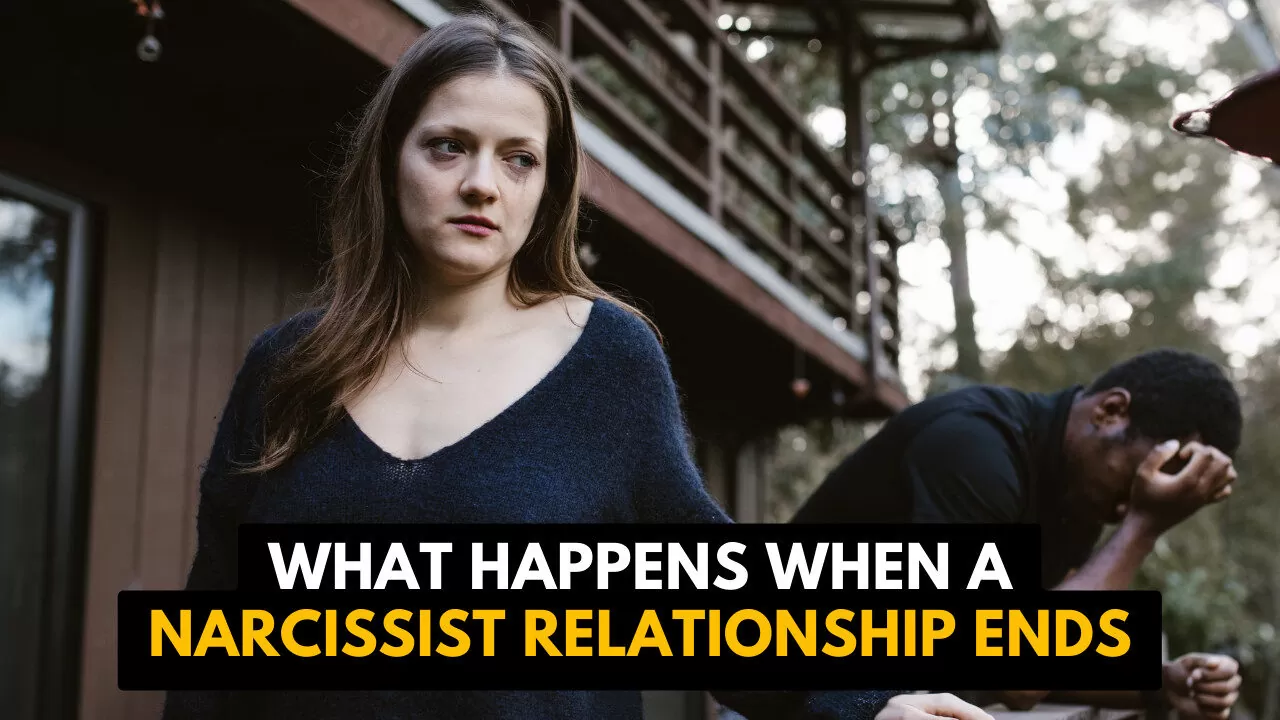
When their ego is bruised, narcissists lash out in rage. So, that comes when you break up with them. What else happens when a narcissistic relationship ends?
They act in one of three major ways:
- They try getting you back through intense idealization, guilt-tripping, victim-shaming, or playing the pitiful puppy.
- They get more insulting and aggressive and may humiliate you in public. Their bitterness may lead to leaking your private moments and intimate secrets.
- They move on as if nothing happened, which usually happens when the narcissist has sucked all the benefits they could get from you.
Research suggests a 33-47% genetic component to narcissism. You can’t fix these people. It’s always better that you leave your narcissist, even if you have no money.
10 Things Happen To Narcissists When You End The Relationship
What a narcissist does at the end of a relationship is much like how their parents acted when the yet-to-be-narcissist child failed to meet their parents’ expectations.
In a way, narcissism develops as a defense mechanism to protect the child from the overcritical and overexpecting parent. Ignoring a narcissist reopens the old wounds of the inner child.
“When you dump a narcissist, it’s a slap on their ego and a theft of their narcissistic supply.”

- Bursting of The Ego Bubble: A narcissist’s ego bubble is an inflated sense of self-importance and superiority. When a breakup occurs, the bubble bursts, revealing their pretenses and lies. They feel shame and insecure. Since they lack the capacity to sit with those painful feelings, they often respond with anger, denial, blame, or coercive tactics to restore their self-image.
- Urgency To Repair Ego: Narcissists use relationships as sources of admiration, validation, and status elevation. Breakups take those supplies away, deflating their ego and making them vulnerable. This creates an urgency to repair their damaged ego. So they start to seek validation from other people, social media, or dating apps. Or even try to reconnect with ex-partners to replenish their supply.
- Aggression: Narcissism and hostile behavior following an ego threat are strongly linked. A review of 25 studies found narcissists may show aggressive behavior after a breakup (Lambe & Hamilton-Giachritsis, 2018). Abuse of their ex is how they try to regain control.
- Blame Shifting: A narcissist’s default is dodging accountability. So they pin the breakup on their ex. They use guilt-tripping, accusing their ex of being selfish, betraying, or abandoning. This helps keep their flawless self-image intact.
- Smear Campaigns: Narcissists are known to trash other people’s reputations to elevate their ego. They may spread lies, distort facts, or exaggerate their ex’s flaws to friends, family, or online. They often present themselves as helpless victims to gain public sympathy and rewrite the breakup narrative.
- Hoovering: “Hoovering” is a known tactic in narcissistic relationships. They might circle back with charm or fake apologies to suck their ex back in, especially if the new supply is not yet in full capacity. Hoovering is not love; it’s a devious way to maintain dominance post-breakup.
- Stalking or Surveillance: Narcissistic stalking can be dangerous. Some track their ex-partner’s moves on social media, via mutual contacts, or even by showing up uninvited to events. Studies link this to the inability of the narcissist to let go of perceived “property” they possess. Some may quickly find new partners and flaunt them on social media to spark envy and prompt reconciliation.
- Grandstanding: Post-breakup, narcissists intensify grandstanding (acting dramatically to impress an audience) to fulfill their need for admiration. They are overcompensating to mask the supply hit.
- Moving On Quickly: They can quickly form new relationships to fill the ego void that has been left behind. This is not out of love or limerence; the goal is to feed their starving ego.
- Emotional Detachment: Many narcissists do not go through heartbreak but rather feel indifference or even relief after ending a relationship. Regardless, if all their attempts to find a new partner fail, they may fall into a loneliness spiral.
“One dose of Narcissistic Supply is enough to elevate the narcissist from the depths of misery to the heights of manic euphoria.”
— Sam Vaknin, Depression and Narcissistic Pathologies of the Self, 2021
Read: How The Narcissistic Abuse Cycle Unfolds: 4 Stages of Trauma
What happens when you’re indifferent to the narcissistic relationship ending?
- Loss of control: When you ignore a narcissist and show them that you don’t care anymore, especially after a breakup, they see it as you breaking out of their control.
- Insult to their ego: They also see it as an insult to their superiority. So they react aggressively. The overt narcissists do it openly, while the covert ones do it via passive hostile behavior and in their fantasies.
- A double loss of love: A relationship with a narcissist is a one-way love flow: your love and their love both go to them. So, at the breakup, they are at a double loss. You take away your love. And their self-love, which used to get life from your validation and attention, is gone too.
What to say to a narcissist to shut them down?
If you want to shut down a narcissist, don’t keep them guessing. They usually respond well to explicit instructions. So tell them clearly you’ve broken up with them and ask them politely not to contact you again.
A crystal-clear way is to tell them:
“I am breaking up with you. Our relationship is over. We can discuss the closure tomorrow. Do not contact me after tomorrow.”
A creative way to respond to a narcissist to shut them down comes from Eric Barker, author of Plays Well with Others: The Surprising Science Behind Why Everything You Know About Relationships Is (Mostly) Wrong:
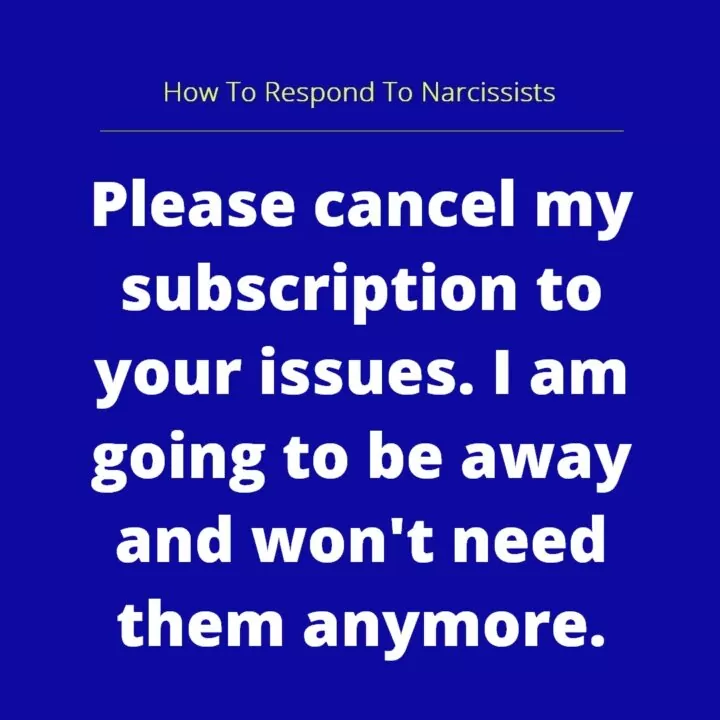
“Please cancel my subscription to your issues.”
- Check out the 20 Telltale Signs of A Narcissist.
How do you win with a narcissist?
You cannot win with a narcissist, ever. The best way to handle them is to simply walk away from the game.
If that’s not possible, as with an office narcissist, set strict boundaries with them. Involve others to make them aware of the ways the narcissist may encroach on your personal space.
Do not emotionally react to their triggering behaviors. Make it clear that you have a strictly transactional relationship with them.
When you yell at a narcissist for not doing things they should have done, you just tell them how to manipulate you better.
Some narcissists are so good at narcissism that they can manipulate their therapists.
Using a well-documented tactic called “countertransference,” the NPD patient may emotionally entangle their therapist to respond in ways that they want (Diamond & Clarkin, 2014).
Often, narcissists get worse with treatment.
However, there are two research-backed ways you may (or may not) help you win over a narcissist:
1. Share a point of similarity.
Researchers from the University of Michigan found that when participants shared a key similarity with the narcissistic partner, narcissistic hostile behavior was completely minimized, even under ego threat. (Konrath & Bushman, 2006).
They suggested that when you shared a similarity, the narcissist saw you as more of an extension of themselves. So, since they love themselves so blindly, how can they hurt you?
2. Warn them about public criticism.
Narcissists are careful to maintain their good reputation, and it will prevent them from targeting you.
Narcissists crave empathy and social desirability (Watson & Morris, 1991).
Warn them with, “What will people think of you if you do that?”
Final Words
You cannot fix a narcissist, so do not try. They would cause you serious harm if you tried to repair or salvage them.
Narcissists suffer from higher rates of depression, anxiety, envy and jealousy, perfectionism, relationship difficulties, and self-injurious thoughts. Those are serious issues that you would not want to trigger into an acute phase.
They are not your responsibility. Let a mental health professional handle them.
√ Also Read: 7 Steps To Move On From A Toxic Relationship
√ If you liked it, please spread the word.
» You deserve happiness! Choosing therapy could be your best decision.
...
• Disclosure: Buying via our links earns us a small commission.