Today's Saturday • 8 mins read
— By Dr. Sandip Roy.
Someone you knew so well ghosted you. How can you find closure and move on after they vanished without a word, leaving you hanging?
Ghosting creates an unfinished story. You wait for a text back. You check your phone. Days pass. Then weeks. They never respond.
Dating apps turned relationships into games. Social media made rejection easier through slow fades, benching, breadcrumbing, and ghosting.
Ghosting means cutting off all contact without explanation. The person doing it expects you to treat them like they no longer exist. The person being ghosted waits for closure that never comes.
- Ghoster = the one who breaks the communication (the initiator of the ghosting process)
- Ghostee = the one who’s expectedly abandoned (the non-initiator in the ghosting process)
What Ghosting Does to You
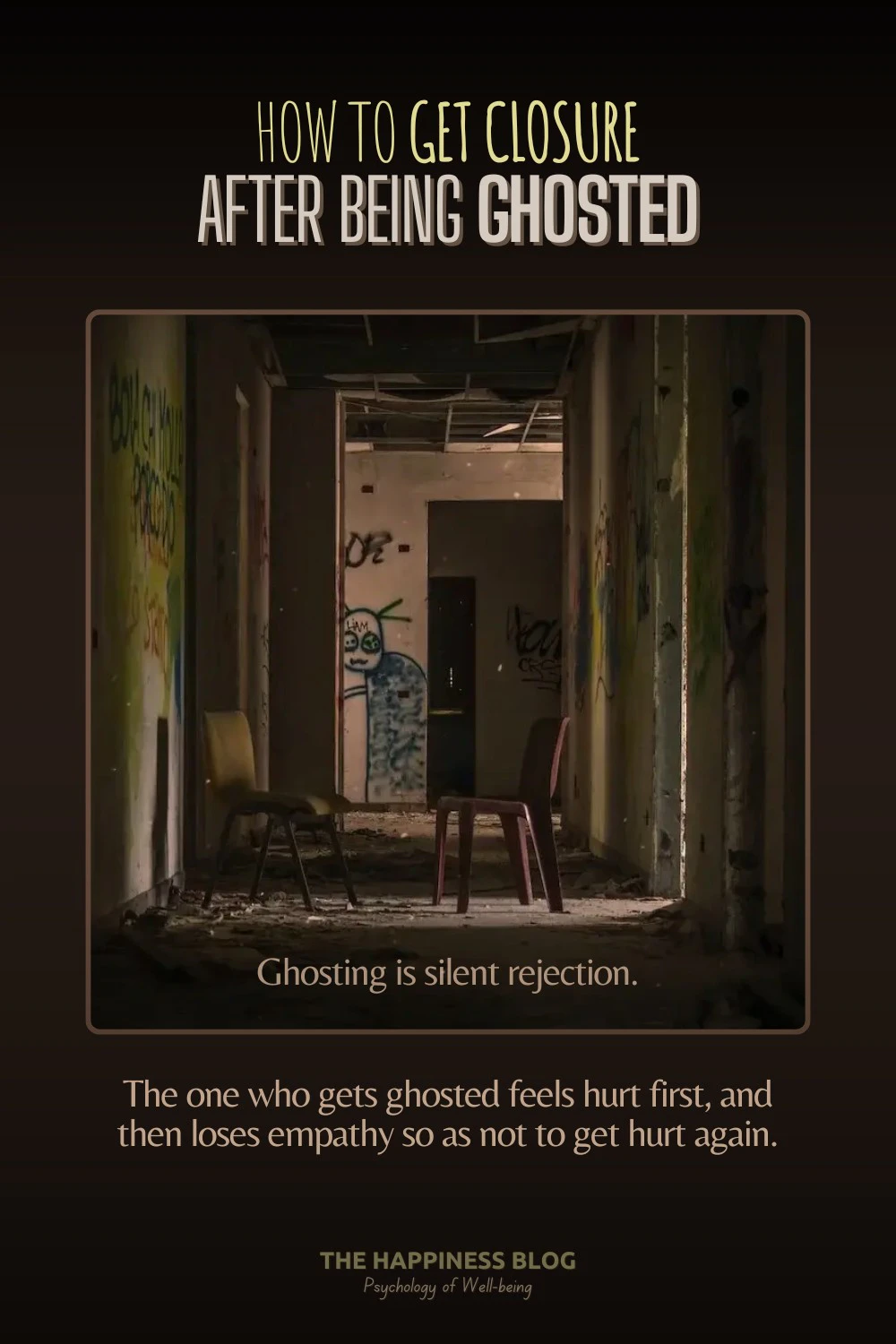
Ghosting, or silent rejection, is a disturbing behavior that takes away our ability to connect with others and understand their feelings.
The person who ghosts may or may not feel guilty. But the person who gets ghosted feels hurt first, and then develops empathy loss so as not to get hurt again.
Sherry Turkle, an MIT professor and sociologist, says, “Ghosting has serious consequences, because when they treat us as if we could be ignored, we begin to think that this is fine, and we treat ourselves as people who don’t have feelings.”
4 Consequences of Ghosting
- Normalizes dismissal: Not replying to messages or calls makes silence seem acceptable, removing the basic expectation of a response that would be standard in person.
- Reduces empathy: Treating people as if they can be ignored teaches that callous behavior is okay, so caring for others weakens.
- Devalues feelings: People learn to treat emotions as unimportant, shutting off their own and others’ need for acknowledgment.
- Avoids difficult conversations: Ghosting lets people sidestep confrontation, negotiation, and compromise, necessary skills for mature relationships.
How To Get Closure & Move On After Being Ghosted
If you’re the ghostee, the ghoster vanishes as if you no longer exist, leaving you confused about what the relationship even meant.
These are some ways to handle that:
1. Ask for Closure Directly
Uncertainty keeps you trapped in a loop of wondering and waiting. Break that loop with one clear message.
Keep it simple and direct:
- “I noticed we haven’t talked lately. If you’ve decided to end things, I’d appreciate knowing for sure.”
- “Hey, it seems like we haven’t connected in a while. If you’ve moved on, could we talk about it? It would help both of us.”
- “Hi, our communication stopped. If you’ve chosen to end things, a conversation would help me understand and move forward.”
If they don’t respond, you have your answer. That silence is their decision. Move on.

2. Remember This Isn’t About You
Your first instinct is to examine yourself. What did I say? What did I do? This focus needs to shift.
They chose to ghost, not you. That choice reveals their character, not yours.
Ghosters cannot typically handle difficult conversations. They may have learned to hide their honest feelings and avoid confrontations.
They choose the path of least resistance. Their behavior reveals their inability to speak their mind.
It says nothing about you as a person, so maintain your sense of self-worth.
3. Stop Blaming Yourself
We make sense of life by matching patterns. When someone ghosts you, your mind searches for reasons.
You replay conversations and analyze the texts, and often end up blaming yourself for their unexplained behavior.
Stop the self-blame to make sense of what happened.
Instead, answer your uncertainties with these:
- “What’s wrong with me?” Nothing, because it’s their behavior, not yours.
- “What did I do wrong?” Nothing, because you can’t control their choices.
- “What did I do to deserve this?” Nothing makes you deserve ghosting.
Ghosting is common, and often random, in digital dating.
But no amount of ghosting must take away your deservingness for respect and clear communication. This experience doesn’t change that.
4. Give Yourself Closure
Closure doesn’t require their participation. You can create it yourself.
Set boundaries for future relationships. Decide what behavior you’ll accept and what you won’t tolerate.
Block them on social media, email, and messaging apps. This prevents unexpected contact from reopening wounds you’re working to heal.
Accept that it’s over. Acceptance is the foundation of moving forward.
Tell yourself: “They made their choice. That’s where it ends.”
That is your closure.
Move on now; you don’t need their permission.
5. Stop Overanalyzing
Your brain wants answers, so it will create stories to fill the silence. But these stories rarely reflect reality.
A rejection without explanation doesn’t define who you are. It marks a decision made by someone who couldn’t communicate properly.
Stop asking “Why did this happen?” or “What did I miss?” These questions trap you in a cycle that leads nowhere.
Learn what you’ll do differently next time. Learn what patterns to recognize. Then release the need to understand their motives.
Learn to Let Go of These 7 Things For More Peace In Life.
6. Lean on Your People
Isolation makes your pain severe. Connection reduces it and helps you heal faster.
Talk to family and friends who care about you. They’ll remind you of your worth when you forget.
They’ll offer perspectives you may not see right now. They can help distract you with activities that restore your sense of normalcy.
Being around people who value you rebuilds what ghosting damages. Research by Frazier & Cook (1993) found that social support directly correlates with faster recovery after breakups.
You’re loved. You matter. Time with your people proves this truth to you again.
7. Don’t Jump Into Revenge Mode
Pain creates the urge to prove something. You may want to show them what they lost. You may want to make your ex jealous.
Resist that urge. Revenge relationships lack genuine connection. Since they’re built on spite, not compatibility, they create more pain down the road.
Also, watch out for the breadcrumbers: they know you’re ghosted and will try to hook your attention with flirty messages or gestures without any intention to commit.
Both revenge relationships and breadcrumbing delay your healing. They add layers of confusion to what you’re already processing.
Focus on healing first. When you’re genuinely ready, you’ll find someone who offers real respect, consistent effort, and actual commitment.
Your emotional health comes before proving anything to anyone.
8. Practice Self-Care and Get Help
Healing requires active participation. You need to tend to yourself the way you’d care for someone you love.
Do things that bring you joy.
- Read books that absorb you.
- Exercise to release the tension your body holds.
- Start a new hobby that gives you something to look forward to.
These activities shift your mental focus and bring positivity back into your daily life.
Reflect on what you want in future relationships. Think about what you need and what you’ll accept. Learn from this experience without letting it define your future choices.
If you’re struggling to cope, talk to a therapist. Counselors help you work through emotions that feel overwhelming. They provide strategies for handling situations you can’t navigate alone.
Asking for help is a strength, not a weakness. You don’t have to go through this alone.
Understanding Ghosting Behavior
Researchers LeFebvre & Fan (2020) define ghosting as “the unilateral dissolution process of ceasing communication through media.” It’s a sudden end to all contact with no warning and no explanation.
Why do people ghost? Several reasons:
- Avoiding discomfort of speaking up: They have some issues with the relationship, like commitment issues, and ghosting feels easier than having a stressful closure conversation.
- Better options: They met someone else and disappeared instead of being honest.
- Feeling overwhelmed: Relationships take effort. Some people can’t handle it.
- Embarrassment: They don’t want to be the “bad guy” who causes pain.
- Fear of confrontation: They worry about your reaction to rejection.
LeFebvre (2017) found that people ghost because it’s quick and easy, avoiding face-to-face conversations that would be awkward.
Is Ghosting Normal Now?
Many Gen Z-ers see ghosting as acceptable. They believe it saves both people time and emotional energy.
Some psychologists call ghosting emotional abuse. Others see it as behavior from people who avoid conflict. Still others think it’s cowardly and unempathetic.
- Research by Navarro & Larrañaga (2020) found that people who experienced ghosting felt less satisfied with life. They reported more helplessness and loneliness.
- Boss (2007) explains that ambiguity freezes the grief process. Without closure, you can’t properly heal.
Ghosting is acceptable in one clear situation: ending an unhealthy relationship with an abusive person.
In 2017, Charlize Theron cut off all communication with Sean Penn, refusing to answer his attempts to reach her, after being together for four years. But she denied having ghosted Penn.
Final Words
Ghosting ranks among the least caring ways to end a relationship. It causes unhappiness, loneliness, and feelings of worthlessness.
Don’t ghost the next person as revenge. You don’t treat people the way they treated you. You treat them the way you want to be treated.
You deserve better. You will find better.
√ Also Read: Ghoster’s Love: Can A Person Ghost You And Still Love You?
√ Please share this with someone.
» You deserve happiness! Choosing therapy could be your best decision.
...
• Disclosure: Buying via our links earns us a small commission.