Today's Friday • 12 mins read
— By Dr. Sandip Roy.
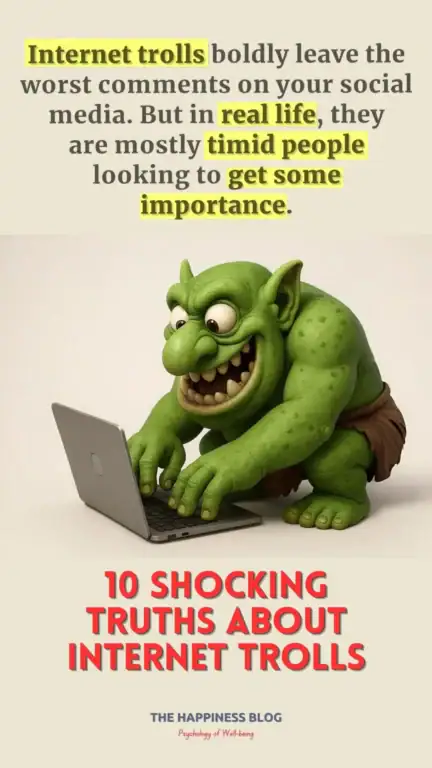
Internet trolls will say the meanest and vilest things to you like they are not afraid of anything. But if you meet them in real life, chances are they are weak and empty people.
Many trolls live ordinary lives doing average jobs, hiding a troubled psyche. The online abuse is a release valve for that repressed psyche.
Discover ten lesser-known dark truths about internet trolls. Share this post with someone who might benefit from it.
10 Dark Psychology Facts About Internet Trolls
1. Trolls Target The Overly Sensitive People
An internet troll’s first goal is to trigger and intensify emotional reactions.
They deliberately provoke those most likely to react, often those oversensitive to criticism. They feel more powerful and in control when their victims show public signs of distress.
Trolls like to make oversensitive people look bad in front of others; this is an everyday sadism trait. Sadists enjoy inflicting cruelty and making others suffer as a goal in itself rather than a means to achieve something else (Thomas & Egan, 2022).
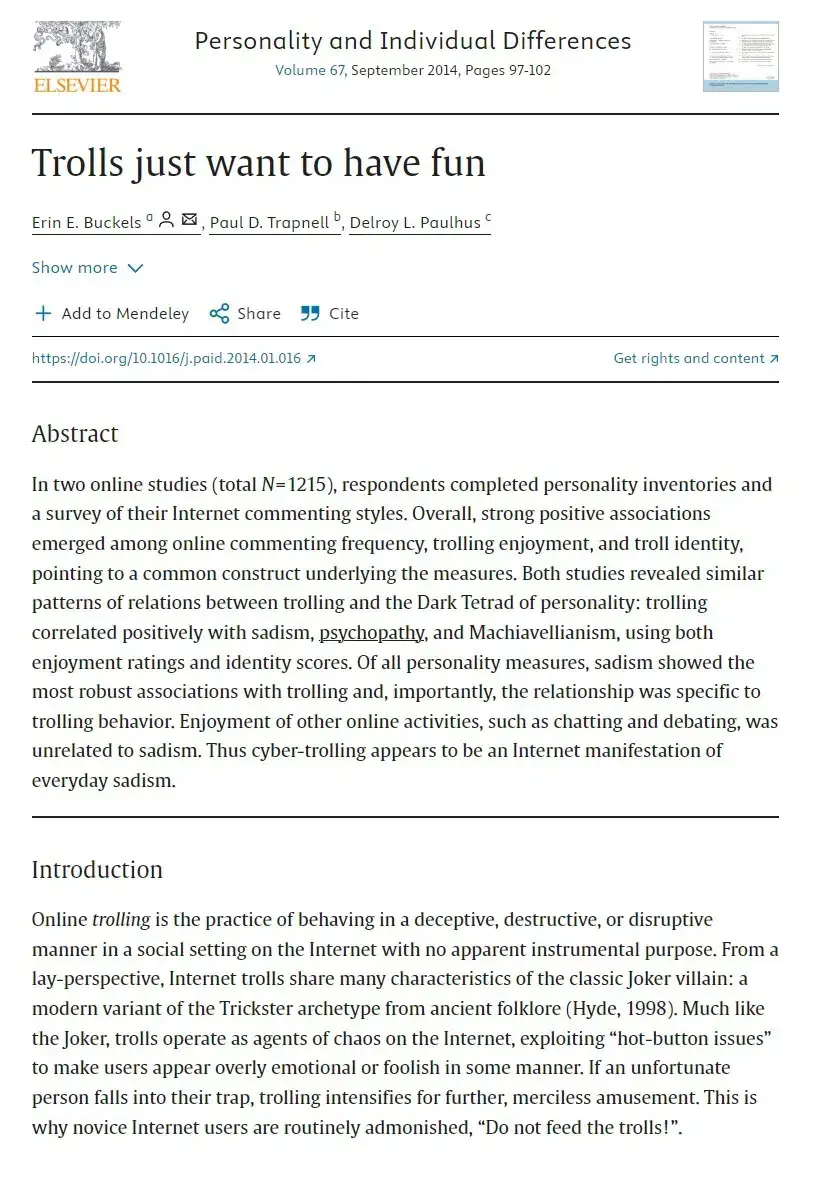
Research links trolling to sadism and psychopathy (Buckels & Trapnell, 2014).
➤ How to deal with it: See their bait early on. Remind yourself, they are trying to get a rise out of you, not move the conversation along. Don’t respond to their snide comments. Ignore, block, or mute them.
2. Most Trolled Ones Are People Aged 18 to 29
Trolls specifically target young people aged 18 to 29, likely because this age group uses social media most actively.
Pew Research Center (2021) found that 64% of grown-ups under 30 have experienced online harassment, the highest among all age groups. Severe online abuse showed a similar pattern, with 48% of the target victims being in the 18-29 age range.

➤ How to deal with it: Don’t share too much private information on social media. Report trolls who publicize details of your private life. Take social media breaks. Seek support from friends, family, and authorities.
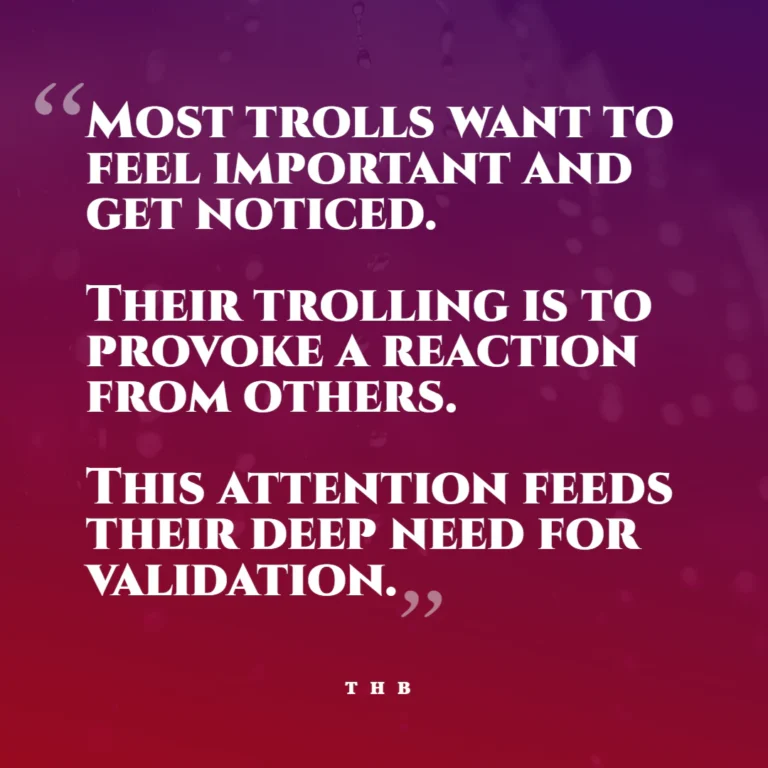
Most trolls want to feel important and get noticed. Their trolling is to provoke a reaction from others. This negative attention feeds their deep need for validation.
3. Fierce Trolls Are Often Tame In Real Life
“Online trolls are offline cowards.”
Most internet trolls have very different personalities when they’re not online. They often appear decent, nice, and even shy or unassuming in person.
A 2023 study found that people who prefer to stay anonymous online are more likely to engage in antisocial behaviors and feel unaccountable for their actions. They admitted to statements like “I like being anonymous because I can say whatever I want without consequences.”
This could be because they often struggle with negative self-perceptions, high self-consciousness, or low self-esteem in real life.
➤ How to deal with it: Don’t accept connection requests before checking their online reputation. Many trolls may use new identities to re-enter your circles after being blocked.
4. Trolling Is A Modern-Day Public Flogging
As Ronson (2015) notes, trolling is the modern-day equivalent of a “town square flogging.”
Online trolls act like a mob, shaming and humiliating their targets before a watching crowd. They turn silent bystanders into fuel for these brutal digital spectacles.
Small mistakes are shown as grave faults, and the punishments meted out are unfair. The victim is made to feel and suffer far worse about their shame and distress.
➤ How to deal with it: Stay calm, avoid public confrontations, and report abusive content directly to moderators. Get off social media and do something else to distract yourself.
5. Trolls Thrive on Sadism and Narcissism
Trolls are high on sadism and narcissism, finding pleasure in provoking emotional reactions and exerting power over others.
Studies link trolling to dark personality traits like psychopathy and Machiavellianism, with sadists showing the strongest connection (Evita March, 2019).
Many trolls troll for money. These paid trolls will relentlessly harass you with hate-filled propaganda and messages. They intensify when you fight back with facts and data. Paid trolls won’t end a debate, since more engagement equals more pay.
➤ How to deal with it: Spot them early and disengage from their toxic interactions. Report the paid trolls to social media communities for violating policies. Tagging the official authorities can also help tackle the paid trolls.
6. Anonymity Fuels Their Toxic Behavior
Being anonymous is one main reason why people harass, outrage, and hurt others online.
Many studies show that anonymous situations can often lead people to behave differently than when they are identifiable (Zimbardo, 1969; Lea et al., 1992; Douglas and McGarty, 2001).
Anonymity creates an “online disinhibition effect.” Because their true selves are invisible online, they feel free to act in ways they would hesitate to do in person.
- They are unabashedly rude online because the internet hides their true identity.
- They believe they are untraceable and thus safe from any real-world consequences.
Researchers found that a desire for anonymity may be a better sign of those who will troll online (Nitschinsk & Tobin, 2022).
➤ How to deal with it: Use privacy settings to limit who can contact you. Quickly report any anonymous accounts that cross the line of social decency.
7. Trolls Use Deception To Bait and Escalate
Trolls use deception to bait a victim, writing opposing comments on their pet beliefs or “hot-button” topics to trigger negative reactions.
They escalate with harsher words, aiming to make their target overreact and appear unstable.
➤ How to deal with it: Recognize their tactics early and avoid taking the bait to maintain control.
8. Trolling Can Lead to Serious Mental Health Harm
Victims of trolling often experience higher levels of depression and anxiety, and lower well-being, with some even facing physical symptoms like headaches (Bonanno et al., 2013; Campbell et al., 2012).
Trolls may target those already depressed or lonely, worsening their state.
➤ How to deal with it: Seek support and limit exposure to toxic online spaces. If necessary, have someone accompany you when you go online on social media.
9. Trolls Crave Attention and Audience Participation
Once a victim responds, the troll gains the limelight. Then they intensify their insults and bullying to draw more people to target the victim.
Even if the audience does not participate, their silence feeds the troll’s behavior.
➤ How to deal with it: Starve the troll of attention. Do not reply, like, or react to their posts or comments. Hide or delete their comments if possible. Ignore their argument, logic, or opinion, no matter how strong or wrong. If you need to clarify something, post neutral, broad updates, or schedule your announcements. Report their posts for harassment (screenshots, timestamps) to the platform authorities.
10. Trolling Is A Habit, Not A One-Off Act
Trolls will troll every chance they get and every place they go.
Almost all trolls are repeat offenders. Most of them take their trolling habit with them wherever they go online.
Their strikes become sharper and more effective as they learn from the failures of their trolling campaigns. Their success in “tasting blood” motivates them to troll more often.
➤ How to deal with it: Stay alert. Keep an eye out for known trolls, early snide remarks, and recurring patterns. Block or mute persistent trollers. As a rule, don’t take any online harassment lightly; offenders will most likely offend again. Report with evidence (screenshots, timestamps).
How Trolls Work: The M.O. of Internet Trolls
Their usual M.O. (modus operandi) is as follows:
- First, they use deception to bait a victim, writing opposing comments on their pet beliefs or “hot-button” topics. They leave mean comments on their social media posts to trigger negative reactions.
- They keep at it, choosing harsher words, triggering the person to overreact. They want to show how emotionally unstable and “trigger-prone” their target is.
- Once the victim gets back at the troll, it gives them the limelight they wanted.
- Then they harass the victim with intense insults, abuse, and bullying, trying to draw the audience to join in to trouble the victim. Even the silence of the audience is enough to carry on their trolling.
- Success (of having “tasted blood”) makes them troll more often. They realize they can get away with their evil behavior because the internet gives them anonymity.
- A troll may not troll every time they go online for fear of being called out for habitual bullying.
Psychology of Internet Trolls
Internet trolling is driven by the Dark Tetrad personality traits (sadism, psychopathy, Machiavellianism, and narcissism) combined with online anonymity and the desire to provoke emotional reactions.
Psychological Traits of Internet Trolls:
- Everyday Sadism: Research shows that everyday sadism is the strongest predictor of trolling. Trolls genuinely enjoy causing emotional pain, distress, and frustration (Evita March, 2020).
- Empathy Imbalance: Trolls often possess high cognitive empathy (knowing precisely how to hurt or trigger someone) but low affective/emotional empathy (lacking remorse or the ability to feel the victim’s pain).
- Dark Triad/Tetrad: High scores in psychopathy and Machiavellianism correlate with manipulative, disruptive, and antisocial internet behavior (Volkmer & Gaube, 2023).
Why Trolls Troll?
People troll for many reasons. These include revenge, thrill-seeking, and boredom (Shachaf & Hara, 2010; Cook et al., 2018; Pfattheicher et al., 2021). Trolling online can also be seen as humorous to the troller and observers, which may further reinforce the behavior (Cook et al., 2018; Sanfilippo et al., 2018).
Some trolls have had traumatic experiences and want to teach people a lesson about the harsh online world. Some blame their trolling behavior on their troubled past lives (NYT interview).
Internet trolls target people rather than ideas.
1. Trolling Personalities
Trolls are mostly associated with psychopathy (impulsivity and a callous lack of empathy) and sadism (a desire to harm others for pleasure). Trolling has also been linked to social dominance tendency, a lack of emotional empathy, and uncontrolled impulsivity (Buckels et al., 2014; March et al., 2017; Sest and March, 2017; Bentley and Cowan, 2021).
Four major factors suggest who might be an internet troll:
- High scores in sadism: they find pleasure in other people’s pain (Sest & March, 2017)
- High psychopathy: less concerned about others’ feelings (Buckels & Trapnell, 2014)
- High “negative social potency”: enjoy being mean to others (Craker & March, 2016)
- Low “affective empathy”: they do not feel what others feel (Sest & March, 2017)
2. Anonymity and disinhibition effect
Anonymity facilitates trolling (Griffiths, 2014; Coles and West, 2016; Cook et al., 2018).
Anonymous online spaces may make it easier to harass others and manipulate people while remaining unaccountable for their actions (Griffiths, 2014; Nitschinsk et al., 2022a).
Certain aspects of online environments (e.g., asynchronicity and reduced visual cues) make one feel more anonymous. This can lead to the “online disinhibition effect,” where they feel less bound by social norms. In fact, the disinhibiting effects of anonymity increased trolling in an experimental online chat room (Nitschinsk et al., 2022b).
3. Compensation for insecurity
Some trolls troll to make up for feelings of inadequacy, powerlessness, insecurity, or social anxiety in their real lives. For them, trolling is a coping mechanism. Being aggressive or offensive lets them feel a sense of control or dominance.
4. Social experimentation
Some trolls see it as a form of social experimentation. They are curious about how far they can push boundaries or how others will react to their actions. This can be a way to explore different aspects of their personality that they cannot express in their everyday lives.
5. Escapism and role-playing
For some, trolling can be a form of escapism or role-playing. They adopt a troll persona as a way to escape the pressures or monotony of their real lives. This persona allows them to act out fantasies or behaviors that they would never engage in offline, providing a temporary escape from their usual timid or gentle nature.
What Is Online Harassment
Pew Research defines online harassment as using these six distinct behaviors:
- Stalking
- Physical threats
- Intimate harassment
- Offensive name-calling
- Purposeful embarrassment
- Harassment over a sustained period of time
- 41% of Americans have personally experienced some form of online harassment. Social media is by far the most common venue cited for harassment, with up to 75% of targets of online abuse being on social media. (The State of Online Harassment, Pew Research, 2021).
- Targets of cyberdating intimacy-related abuse were seven times more likely to have also experienced physical coercion (55 vs. 8 %) than non-targets. These perpetrators were also 17 times more likely to have also perpetrated intimacy-related coercion (34 vs. 2 %) than were non-perpetrators (Zweig & Dank, 2013).
- Trolling behavior has been linked to dark personalities: sadism, narcissism, antisocial personality, and Machiavellianism, with sadists having the strongest links to trolling (Evita March, 2019).
- Trolls are mostly sadists and/or psychopaths. A Canadian study (“Trolls just want to have fun”) found that most internet trolls have links with the Dark Tetrad of Personality (narcissists, psychopaths, sadists, and Machiavellians).
- Four critical characteristics of a troll: hostile behavior, deception, disruption, and success (Hardaker, 2010).
Effects on Trolling Victims
Victims of online trolls have:
- Lower well-being (Heiman et al., 2018)
- Higher levels of anxiety (Campbell et al., 2012)
- Higher rates of depression (Bonanno et al., 2013)
- Physical symtoms like headaches, stomachaches, and bed-wetting among students (Rao et al., 2018)
History of Internet Trolling
- Internet trolling began in the early 1980s when it was called “flaming.” It involved heated arguments or targeted insults in online communities like newsgroups and bulletin board systems (BBS).
- The term “trolling” originated in the early 1990s. It was initially used to describe provocative behavior that aimed at triggering strong reactions from others, often for entertainment.
- The rise of anonymous platforms (e.g., 4chan, Reddit) in the 2000s enabled trolling to explode by allowing users to act without accountability.
- Today, “trolling” is used interchangeably with cyberbullying. Cyberbullies often know their victims, and their abuse is often targeted and repeated, and could be posted for others to see.
- Researchers identify trolling as a form of online sadism (Buckels et al., 2014).
Further Reading:
- The Cyber Effect: A Pioneering Cyberpsychologist Explains How Human Behaviour Changes (Book) by Mary Aiken, 2016
- Political Cyberbullying: Perpetrators and Targets of a New Digital Aggression (Book) by Sheri Bauman, 2019
- Cyberbullying and psychological well-being in young adolescence (Hellfeldt & López-Romero, 2019).
Final Words
Trolling is ultimately a form of online bullying and harassment (Pew Research, 2014).
Sadly, paid trolling is a reality of our times. Celebrities and politicos hire troll farms to insult, shame, and cancel their opponents. These troll gangs scour the internet for any post critical of their employers and respond with a barrage of vile insults.
√ Also Read: 8 Ways To Deal With Internet/Online Trolls
√ Please share this with someone.
» You deserve happiness! Choosing therapy could be your best decision.
...
• Disclosure: Buying via our links earns us a small commission.