
Today's Friday • 17 mins read
Happiness science, or positive psychology, rests on one core claim: your well-being responds to your actions. Researchers call these positive interventions; we can call them happiness-boosting activities.
Of course, you cannot control everything, and no one can ever feel happy all the time. But you can tilt the odds in your favor by repeating a handful of well-tested activities.
You need to repeat your happy activities to build your happiness muscle. They slowly shape your biology, psychology, relationships, and meaning for the better.
This guide lists 25 science-backed activities for a happier life. Each includes a short explanation, a practical “try this” step, and an honest look at the evidence behind it.
How To Use This List of Happiness Activities
You do not need all 25. Trying to run all of them at once usually backfires. You’re better off doing a few ones from the list, like you’re running small experiments.
- Pick 3 activities for the next 7 days.
- Choose one from each category:
- Body (sleep, light, movement)
- Mind (attention, emotions, meaning)
- Connection (relationships, kindness)
- Schedule them on your calendar, not in your head.
- Each night, rate your day from 1 to 10 and write one sentence: “Today was a ___ because…”
At the end of the week, keep what helped and drop what didn’t.
The ideas in this post are not a substitute for professional care. If you’re dealing with persistent depression, anxiety, trauma, or crisis state thoughts, reach out to a licensed mental health professional.
25 Science-Backed Activities For A Happier Life
1. Prioritize sleep quality over sleep perfection
Sleep and well-being move together in both directions. A sleep-deprived person is not happy. An unhappy person is not sleeping well.
A 2023 meta-analysis of longitudinal studies in adolescents found that better sleep quality predicted higher subjective well-being over time, and lower well-being predicted worse sleep later on (Bacaro, Miletic, & Crocetti, 2023).
Improving sleep tends to ripple outward, affecting energy, self-control, patience, and stress reactivity.
Try this: Pick one sleep anchor for the next 7 days:
- A consistent wake time every day, or
- A 30-minute wind-down window with dimmer lights and no work.
Evidence: Bidirectional, longitudinal data link sleep quality and subjective well-being in adolescents (Bacaro, Miletic, & Crocetti, 2023). Similar associations show up in adult and student populations, though most of that work is correlational rather than experimental.
2. Get outdoor morning light within an hour of waking
Light is the primary input your circadian clock uses to set its schedule.
A 2024 systematic review found that morning exposure to bright or blue-enriched light advanced circadian timing and improved sleep, mood, and alertness, though the strongest evidence comes from clinical populations recovering from brain injury rather than the general public (Chow, Ekanayake, & Hackett, 2024).
Bright light therapy is also well established as a treatment for seasonal affective disorder. The mechanism (resetting the suprachiasmatic nucleus, suppressing nighttime melatonin) is solid science. The size of the mood benefit for an average healthy adult stepping outside for a few minutes is less studied and likely modest.
Try this: Step outside for 5 to 10 minutes after waking. You don’t need direct sun, just daylight.
3. Move your body (brisk walking counts)
Exercise has one of the best-supported evidence bases in mental health research.
A 2024 BMJ network meta-analysis of randomized controlled trials found that exercise reduced symptoms of major depression, with walking, jogging, yoga, and strength training all showing benefit (Noetel et al., 2024). You don’t need a perfect plan. You need something repeatable.
Try this: A “minimum viable workout” for mood:
- A 10-minute brisk walk, or
- 20 bodyweight squats plus 10 wall push-ups.
Evidence: Exercise reduces depressive symptoms across multiple exercise types and intensities, based on a large network meta-analysis of RCTs (Noetel et al., 2024).
4. Combine movement with nature
Green space exposure is linked to lower depression and anxiety risk.
Green spaces decrease the risk of psychiatric disorders, including depression, anxiety, dementia, ADHD, and schizophrenia (Zhang & Wu, 2024). A 2023 meta-analysis found that a 10 percent increase in the proportion of green space in an area was associated with lower odds of depression and anxiety (Liu et al., 2023). Earlier work found that even 5 minutes of exercise in a natural setting produced a measurable mood and self-esteem boost, with diminishing returns after that (Barton & Pretty, 2010).
Try this: Do your next walk in a park or along a green route. Go slightly slower than usual and notice your surroundings.
5. Practice mindfulness (10 minutes, or 1 minute if that’s all you have)
Mindfulness is attention training: noticing what’s happening right now without immediately judging it.
A landmark JAMA Internal Medicine meta-analysis of 47 RCTs found that meditation programs produced small to moderate reductions in anxiety, depression, and stress, with effects comparable to those of antidepressant medication in some trials (Goyal et al., 2014). The same review found no clear evidence of benefit for several outcomes, including sleep and substance use, so the gains are real but specific rather than universal.
Try this: Set a timer for 10 minutes. Follow your breath. When your mind wanders, bring it back without scolding yourself.
6. Add loving-kindness practice (2 to 5 minutes)
If mindfulness calms the mind, loving-kindness warms it. Loving-Kindness Meditation (LKM) is a proven way to cultivate compassion through positive wishes towards yourself and others.
Repeating loving-kindness phrases helps to quiet your inner critic, reduce stress, and develop deep emotional resilience.
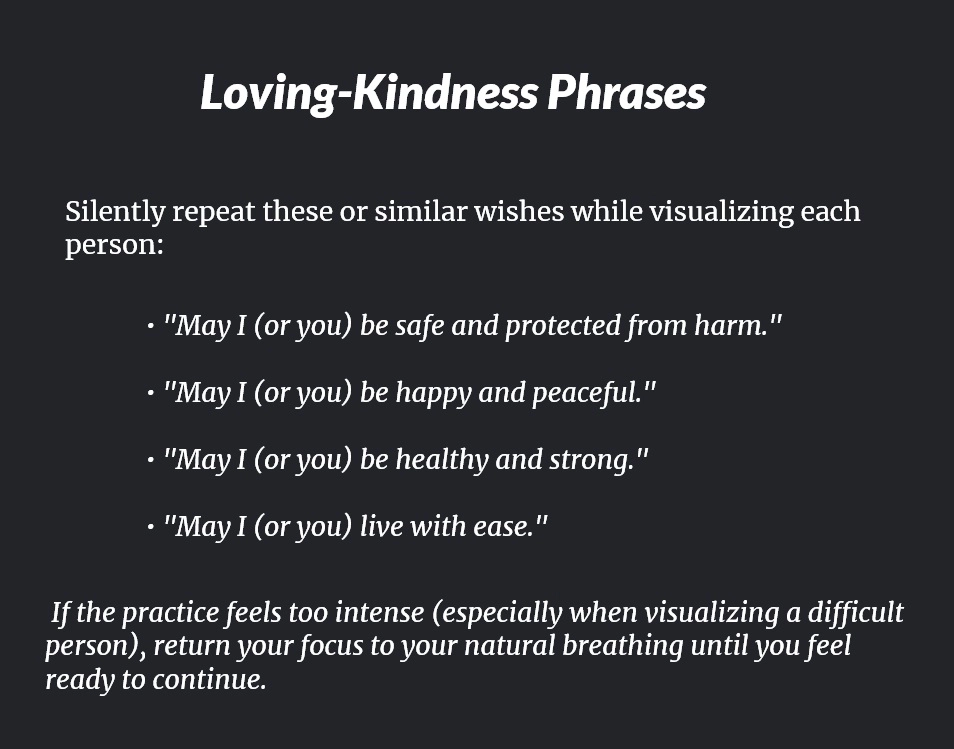
A 2015 meta-analytic review found that loving-kindness meditation produced a moderate, fairly consistent increase in positive emotions across studies (Zeng et al., 2015).
Try this: Repeat slowly: “May I be safe. May I be healthy. May I be peaceful.” Then extend the same phrases to someone you care about.
7. Use the “Three Good Things” exercise at night
This is one of the most studied positive psychology exercises, originally tested by Seligman and colleagues (2005) as part of a broader set of positive interventions. It trains attention toward what went right, which counters the mind’s natural negativity bias.
Try this: Each night, write:
- Three good things that happened.
- One reason each happened.
Evidence: The honest picture here is more modest than most blog posts suggest. A large 2016 meta-analysis of gratitude interventions found a small but reliable improvement in well-being (Hedges’ g around 0.2), with effects that fade over time rather than compounding (Davis et al., 2016).
A 2025 cross-cultural meta-analysis of 145 studies confirmed a similarly small overall effect, with real variation by country (PNAS, 2025). Three Good Things works, but treat it as a small, repeatable nudge rather than a cure.
8. Write a gratitude message (specific beats generic)
Gratitude lands harder when it names something concrete: what someone did, why it mattered, and how it helped you.
Try this: Text or email: “Thank you for ____. It helped me because ____.”
Evidence: Expressed gratitude interventions, where you actually communicate the thanks rather than just journaling it privately, show a similar small but significant effect on psychological well-being across 25 randomized trials (g = 0.22) (Kirca, Malouff, & Meynadier, 2023).
9. Do one small act of kindness
Kindness boosts mood partly through connection and partly through identity: it reinforces the sense of being someone who helps.
Try this: Choose one:
- Give a sincere compliment.
- Help a colleague with a small task.
- Leave a thoughtful review for a local business.
Evidence: Prosocial behavior research, including meta-analyses of kindness interventions, consistently links giving to others with small but real increases in the giver’s well-being (Jenkinson et al., 2013; see also the prosocial spending evidence below).
10. Spend money on others (small amounts count)
The popular claim is “prosocial spending makes you happier than spending on yourself,” based on Dunn, Aknin, and Norton’s original 2008 paper.
Here’s where this guide owes you some honesty: replication has been mixed. A high-powered 2020 registered replication report found a smaller and less consistent effect than the original study suggested (Aknin, Dunn, Proulx, Lok, & Norton, 2020), and a 2022 independent replication also failed to reproduce the original effect size, though it found a significant result on a more direct happiness measure (Kim et al., 2022).
Bottom line: Prosocial spending probably does help, but the effect is smaller and less reliable than the original viral finding implied.
Try this: Use a small budget to treat someone to tea, donate, or buy a tiny surprise gift, and treat it as a low-cost experiment rather than a guaranteed mood lift.
11. Call someone (voice beats text for emotional nourishment)
Social connection is one of the most consistent predictors of well-being in the research literature.
Holt-Lunstad’s 2024 review in World Psychiatry describes social connection as a critical factor for both mental and physical health, with effects on mortality risk comparable to other major health behaviors (Holt-Lunstad, 2024).
Try this: Call one person and ask: “What’s been on your mind lately?” Then listen without trying to fix anything.
12. Meet someone face-to-face
In-person connection adds eye contact, shared environment, and deeper attention than a text exchange offers. If you’ve been isolated, even brief in-person moments can lift your mood.
Try this: Invite someone for a short walk or coffee. Thirty minutes is enough.
Evidence: Social relationship quality is repeatedly identified as a predictor of life satisfaction across decades of well-being research (Holt-Lunstad, 2024).
13. Practice active-constructive responding to good news
When someone shares good news, how you respond matters more than most people realize.
Gable and colleagues’ original 2004 study found that responding with genuine enthusiasm and curiosity, rather than dismissal or quiet understatement, predicted higher relationship satisfaction, intimacy, trust, and commitment (Gable, Reis, Impett, & Asher, 2004).
Try this: When someone shares good news, ask: “What was the best part?” “How did you make that happen?”
14. Volunteer
Volunteering combines connection, purpose, and contribution, which makes it a candidate for “happiness with depth” rather than a quick mood boost.
Try this: Commit to one small volunteering action this month. One hour counts.
Evidence: A 2013 systematic review and meta-analysis found that cohort studies linked volunteering to lower depression, higher life satisfaction, and better well-being, and to a 22 percent lower mortality risk. The authors were careful to note that these benefits were not confirmed in experimental trials, so the observational pattern is strong but causality is not fully settled (Jenkinson et al., 2013).
15. Replace one hour of doomscrolling with reading
Reading offers an alternative to constant attention-switching.
The direct evidence for “reading specifically improves happiness” is thinner than for most items on this list.
What’s better established is that excessive smartphone use and digital overstimulation are associated with poorer attention and higher stress, so swapping in a slower, single-focus activity like reading is a reasonable, low-risk substitution rather than a proven happiness intervention on its own.
Try this: Read for 20 minutes with your phone in another room.
16. Practice single-tasking
Multitasking feels productive but tends to increase mental strain and reduce the feeling of presence in whatever you’re doing.
Try this: For the next 30 minutes, do one task only. Keep a “later list” for anything that tries to pull your attention away.
Evidence: This recommendation draws on attention-training research from the mindfulness literature (Goyal et al., 2014) rather than a dedicated single-tasking trial. Treat it as a reasonable extrapolation, not a directly tested claim.
17. Try a short breathing reset
When you’re anxious, talking yourself down often doesn’t work first. Your nervous system needs a physiological signal of safety before your thoughts can follow.
Try this: Breathe in for 4 counts, out for 6 counts, for 2 minutes.
Evidence: Slow, extended-exhale breathing is associated with increased parasympathetic activity and reduced subjective stress across the breathing-intervention literature, often discussed alongside meditation research (Goyal et al., 2014).
18. Eat your meals without screens
Savoring is the skill of fully experiencing a positive moment instead of running on autopilot through it. Screen-free eating is a simple, low-effort way to practice that skill.
Try this: One meal today: no phone, no TV. Take three slow breaths before the first bite.
19. Make your plate more colorful
Nutrition isn’t a direct happiness lever, but stable energy supports mood and self-control indirectly. A 2019 systematic review and meta-analysis of dietary RCTs found a small but significant effect of dietary improvement on depressive symptoms (Firth et al., 2019).
A later review of the same evidence base described the overall certainty as low to very low (Thomas-Odenthal et al., 2020), so this is a reasonable habit to build, not a treatment to rely on.
Try this: Add two colors you didn’t eat yesterday. Greens plus orange, or red plus purple.
20. Hydrate early
Hydration won’t fix a hard day, but mild dehydration measurably worsens mood.
A controlled study found that 24 hours of fluid restriction in healthy women produced increased fatigue, confusion, and reduced alertness, with confusion and alertness improving again after rehydration (Pross et al., 2013).
A separate study in men found similar mood and concentration effects under exercise-induced dehydration (Armstrong et al., 2012, cited via related hydration research).
Try this: Drink a full glass of water within 10 minutes of waking.
21. Take a short nap when needed
A short nap can improve alertness and mood, particularly after a poor night’s sleep.
A 2023 study comparing nap durations found that naps between 10 and 60 minutes produced clear, lasting benefits for positive mood and self-reported alertness, with a 30-minute nap offering the best balance between benefit and grogginess on waking (Cellini et al., 2023).
Try this: Set a timer for 25 minutes. Even resting quietly without falling asleep helps.
22. Create a 30-minute screen-free pocket daily
Constant notifications fragment attention and raise background stress. A small daily boundary can restore some of that focus.
Try this: Choose one:
- The first 30 minutes after waking.
- The last 30 minutes before bed.
23. Practice self-compassion, especially when you fail
Happy people aren’t immune to failure. They tend to recover from it more kindly.
A 2015 meta-analysis combining 79 studies and over 16,000 participants found a strong overall correlation between self-compassion and well-being (r = .47), with the strongest link to psychological well-being specifically (r = .62) (Zessin, Dickhäuser, & Garbade, 2015).
Try this (1 minute): Hand on chest: “This is hard. I’m not alone. May I be kind to myself right now.”
24. Try a “Best Possible Self” writing exercise
This classic positive psychology exercise asks you to imagine and write about your best possible future, grounded in realistic effort rather than fantasy.
A 2019 systematic review and meta-analysis of 29 studies and nearly 2,900 participants found that the exercise produced significant improvements in well-being, optimism, and positive affect, and reduced depressive symptoms relative to control writing tasks (Carrillo, Rubio-Alcalá, & Inguez-Berbegal, 2019, building on King, 2001).
Try this: Write for 10 minutes: “In 1 year, if things go well because I took consistent action, my life looks like…”
25. Use your strengths on purpose
Identifying a personal strength, like curiosity, kindness, perseverance, or humor, and using it intentionally tends to feel energizing rather than effortful, because it works with your natural tendencies instead of against them.
Try this: Choose one strength and ask: “How would I use this today, for 5 minutes?”
A 7-Day Starter Plan (pick one)
Pick 3, schedule them, repeat for 7 days.
Plan A: The “Body First” plan (15 minutes a day)
- Morning: 5 to 10 minutes of outdoor light (Activity 2)
- Afternoon: a 10-minute brisk walk (Activity 3)
- Night: Three Good Things (Activity 7)
Plan B: The “Connection” plan
- Today: call someone (Activity 11)
- This week: meet someone face-to-face (Activity 12)
- Daily: one act of kindness (Activity 9)
Plan C: The “Calm” plan
- Morning: 10 minutes of mindfulness (Activity 5)
- Midday: breathing reset (Activity 17)
- Night: self-compassion (Activity 23)
FAQs
1. What is the fastest way to feel happier?
In the short term, the most reliable lifts tend to come from movement, real conversation, and attention shifts like mindfulness or gratitude. None of these are magic. They’re repeatable state-changers with modest, well-documented effects (Noetel et al., 2024; Holt-Lunstad, 2024; Goyal et al., 2014).
2. Can you be happy all the time?
No. A healthy life includes sadness, frustration, grief, and fear. The goal isn’t constant happiness. It’s a higher baseline of well-being and a faster recovery after setbacks.
3. What if I’m too depressed to do these activities?
Start tiny: 1 minute of breathing, 2 minutes of sunlight, one text to a safe person. Consider professional support if low mood persists or worsens.
References:
- Aknin, L. B., Dunn, E. W., Proulx, J., Lok, I., & Norton, M. I. (2020). Does spending money on others promote happiness? A registered replication report. Journal of Personality and Social Psychology.
- Armstrong, L. E., et al. (2012). Mild dehydration affects mood in healthy young women. Journal of Nutrition, 142(2), 382-388.
- Bacaro, V., Miletic, K., & Crocetti, E. (2023). A meta-analysis of longitudinal studies on the interplay between sleep, mental health, and positive well-being in adolescents. International Journal of Clinical and Health Psychology.
- Barton, J., & Pretty, J. (2010). What is the best dose of nature and green exercise for improving mental health? Environmental Science & Technology, 44(10), 3947-3955.
- Carrillo, A., Rubio-Alcalá, F. J., & Inguez-Berbegal, S. (2019). Effects of the Best Possible Self intervention: A systematic review and meta-analysis. PLOS ONE.
- Chow, C. M., Ekanayake, K., & Hackett, D. (2024). Efficacy of morning shorter wavelength lighting in regulating sleep, mood, and fatigue in traumatic brain injury. Clocks & Sleep, 6(2), 255-266.
- Davis, D. E., et al. (2016). Thankful for the little things: A meta-analysis of gratitude interventions. Journal of Counseling Psychology, 63(1), 20-31.
- Firth, J., et al. (2019). The effects of dietary improvement on symptoms of depression and anxiety: A meta-analysis of randomized controlled trials. Psychosomatic Medicine, 81(3), 265-280.
- Gable, S. L., Reis, H. T., Impett, E. A., & Asher, E. R. (2004). What do you do when things go right? The intrapersonal and interpersonal benefits of sharing positive events. Journal of Personality and Social Psychology, 87(2), 228-245.
- Goyal, M., et al. (2014). Meditation programs for psychological stress and well-being: A systematic review and meta-analysis. JAMA Internal Medicine, 174(3), 357-368.
- Holt-Lunstad, J. (2024). Social connection as a critical factor for mental and physical health. World Psychiatry, 23(3), 312-332.
- Jenkinson, C. E., et al. (2013). Is volunteering a public health intervention? A systematic review and meta-analysis. BMC Public Health, 13, 773.
- Kim, G., et al. (2022). Prosocial spending encourages happiness: A replication. PLOS ONE.
- Kirca, A. M., Malouff, J., & Meynadier, J. (2023). The effect of expressed gratitude interventions on psychological wellbeing: A meta-analysis. International Journal of Applied Positive Psychology, 8, 63-86.
- Liu, Z., et al. (2023). Green space exposure on depression and anxiety outcomes: A meta-analysis. Environmental Research, 231, 116303.
- Noetel, M., et al. (2024). Effect of exercise for depression: Systematic review and network meta-analysis of randomised controlled trials. BMJ, 384, e075847.
- Pross, N., et al. (2013). Influence of progressive fluid restriction on mood and physiological markers of dehydration in women. British Journal of Nutrition, 109(2), 313-321.
- Seligman, M. E. P., Steen, T. A., Park, N., & Peterson, C. (2005). Positive psychology progress: Empirical validation of interventions. American Psychologist, 60(5), 410-421.
- Zeng, X., Chiu, C. P., Wang, R., Oei, T. P., & Leung, F. Y. (2015). The effect of loving-kindness meditation on positive emotions: A meta-analytic review. Frontiers in Psychology, 6, 1693.
- Zessin, U., Dickhäuser, O., & Garbade, S. (2015). The relationship between self-compassion and well-being: A meta-analysis. Applied Psychology: Health and Well-Being, 7(3), 340-364.
Final Words
Most positive psychology activities on this list share an unglamorous secret: their individual effects are usually small.
Gratitude journaling moves well-being by a fraction of a standard deviation. Prosocial spending barely survives replication. Even exercise, the best-supported item here, doesn’t cure depression on its own.
The underreported insight is that small effects, stacked and repeated, behave differently than small effects taken alone.
A single gratitude entry won’t change your life. A year of small, repeated nudges across sleep, movement, connection, and attention plausibly will, because each one chips away at a different mechanism rather than fighting the same battle twice.
Pick three activities that feel doable, put them on your calendar, and run them for a week before judging whether they’re working.
√ Also Read: Positive Thinking: How To Practice It & Why, From Science
√ Please share this with someone.
» You deserve happiness! Choosing therapy could be your best decision.
...
• Disclosure: Buying via our links earns us a small commission.