
Today's Saturday • 7 mins read
— By Dr. Sandip Roy.
Some people think there is no real meaning to life, and the universe doesn’t care whether we exist or not. Many others are convinced our existence has a divine purpose.
Does our life on earth have any meaning at all? If yes, what do the Stoics think of it?
As Emperor Caracalla (not Emperor Marcus Aurelius, who wrote “Meditations”), said,
“Everything we hear is an opinion, not a fact. Everything we see is a perspective, not the truth.”
— Emperor Caracalla
What do the Stoic philosophers think the meaning of life is?
After all, we are a pale blue dot.
What is the Stoic meaning of life?
- The Stoic meaning of life is to live with virtue and reason, accept every event as natural order, and be dedicated to their duties.
- Their purpose is to focus on what they can control, live in the present, and improve themselves.
- Self-control and moral integrity are their existential cornerstones.
Their peace in life comes from not letting emotions overwhelm them, not trying to control external events or other people, and not over-indulging in worldly comforts.
The Stoics believed that the cosmos is governed by a rational principle or logos. They held that the purpose of human life is to understand the cosmos and live in harmony with its principles.
A Stoic reaches a state of eudaimonia (a life of ultimate goodness) by living under the natural laws of the cosmos.

Stoics believe in focusing on the process of the task at hand, working at it with complete awareness and devotion, without worrying too much about the outcomes.
They stay firmly moored in the present, as they fully realize that they are powerless to rewrite the past or influence the future.
We, too, can naturally live happy and good lives by applying these principles to our thoughts and actions.
“What is the meaning of life, Marcus Aurelius?”
“The fruit of this life is good character and acts for the common good.”
– Emperor Marcus Aurelius (121–180 CE), born as Marcus Annius Verus, given the name Verissimus (‘most truthful’).
Marcus Aurelius was an eclectic Stoic; his philosophical influences came from Socrates, Cynicism, Epicureanism, and Stoicism.
His book “Meditations” revolves around the following three Stoic ideas:
- Our beliefs about what is valuable or attractive have a direct influence on our emotions and desires.
- A virtuous life is the same as a happy life, and all that is needed to secure happiness is virtue. Health, money, success, and even the well-being of one’s family and friends are all unimportant for happiness; they are known as “indifferents” or “matters of indifference.”
- We have an inborn tendency to help and benefit others. This tendency, when fully realized, lets us both engage with family and society and see all human beings as forming a “brotherhood” or cosmopolitan city.
How do Stoics see the finality of life?
To a Stoic, the final breath (animam agere) signals a return to nature. They believe the life we received came from nature, and we return it finally.
No matter what we do in life, the same thing awaits us. This Latin phrase says it beautifully: “Omnes una manet nox,” meaning one night awaits us all.
That one night is everyone’s fate and beyond our control. So, we should not waste time or mental energy worrying about or fearing it. Instead, we should focus on living a good life and making the most of our time.
Seneca, a Stoic philosopher, gives an analogy to express the true nature of life. He says that life is like an inn and that all of us will have to leave to make space for another guest. He says our limited time here is just a small fraction of infinite time.
Seneca reminds us that we should value our lives not by the number of years we have lived but by how we lived them. Life must be measured by our virtues and accomplishments.
A Stoic faces the end with dignity and courage. Because they have lived a virtue-filled life.
Stoics make it a point to contemplate their finality. It reminds them to appreciate the value of life more and live each day to the fullest. This is the principle of memento mori.
Emperor Marcus Aurelius often reminded himself:
“You could leave life right now. Let that determine what you do and say and think.” — Meditations, 2.11
Marcus meant we should live each day to the fullest because we never know when our time here will end.
What is a good life according to Stoicism?
Most modern Stoics would hold the idea that the goal of the good life is to align ourselves with reason and virtue. This means using reason to understand the universe and to make decisions that are in accordance with virtue.
Some modern Stoics may also focus on the idea of living in the present moment and finding peace and fulfillment by practicing Amor Fati & Memento Mori.
Most of them would hold that our choices in the present moment are what we are in complete control of.
Why do Stoics need to do purposeful work every day?
The principles of carpe diem and memento mori are both relevant to why Stoics need to do purposeful work every day.
- Carpe diem means “seize the day” or “live in the present moment.” Stoics believe that we should make the most of our time on Earth and live each day to the fullest. This means doing work that we find meaningful and that contributes to the world positively.
- Memento mori means “remember that you will pass.” Stoics believe that this reminder can help us to focus on what is truly important in life and to live in the present moment. When we think about our own mortality, it can help us to appreciate the time that we have and to make the most of it.
When we do purposeful work, we are using our time and talents to make a difference in the world. We are also contributing to our own well-being, because we are feeling fulfilled and satisfied with our lives.
A Stoic would advise that you should select a goal, but you should not seek it to turn out exactly as you want.
Remember the Stoic archer when you set goals: An archer focuses on the target, uses his best skills, but still cannot always will the arrow to strike the target. If the arrow misses the target, they accept it rather than view it as a source of anger or frustration. Then try again.
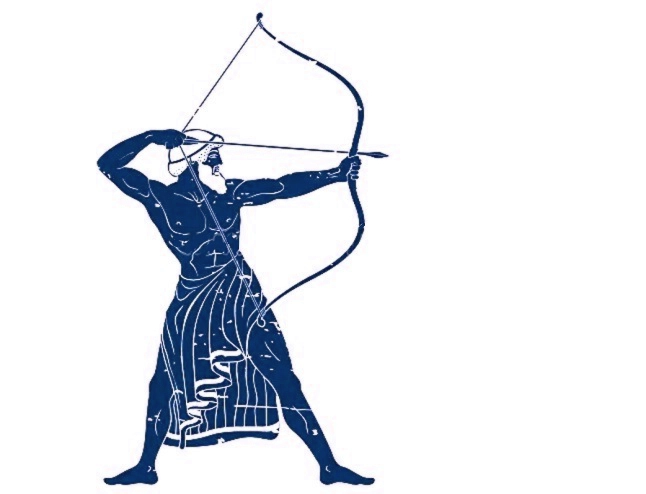
The Stoic archer picks up the arrow and bow and betters his skill with dedication and passion. Similarly, a Stoic seizes the day and makes every effort to be useful to others until their time is over, as fate decides.
Final Words
A king (Marcus Aurelius), a water-bearer (Cleanthes), or a bondsman (Epictetus) became Stoic masters despite their circumstances. They showed that the meaning of life lies in what we do with it.
A Stoic is always asking, “Am I living with virtue? What can I do to make my life more meaningful?”
Stoics choose every act in the here and now guided by reason, accept full responsibility for their decisions and actions, and embrace whatever results turn out.
√ Also Read: How Can Stoicism Help Control Your Anger?
√ Please share this with someone.
» You deserve happiness! Choosing therapy could be your best decision.
...
• Disclosure: Buying via our links earns us a small commission.